

Blog
Getting Around Bali 2026: Scooter, Car or Grab — Which?

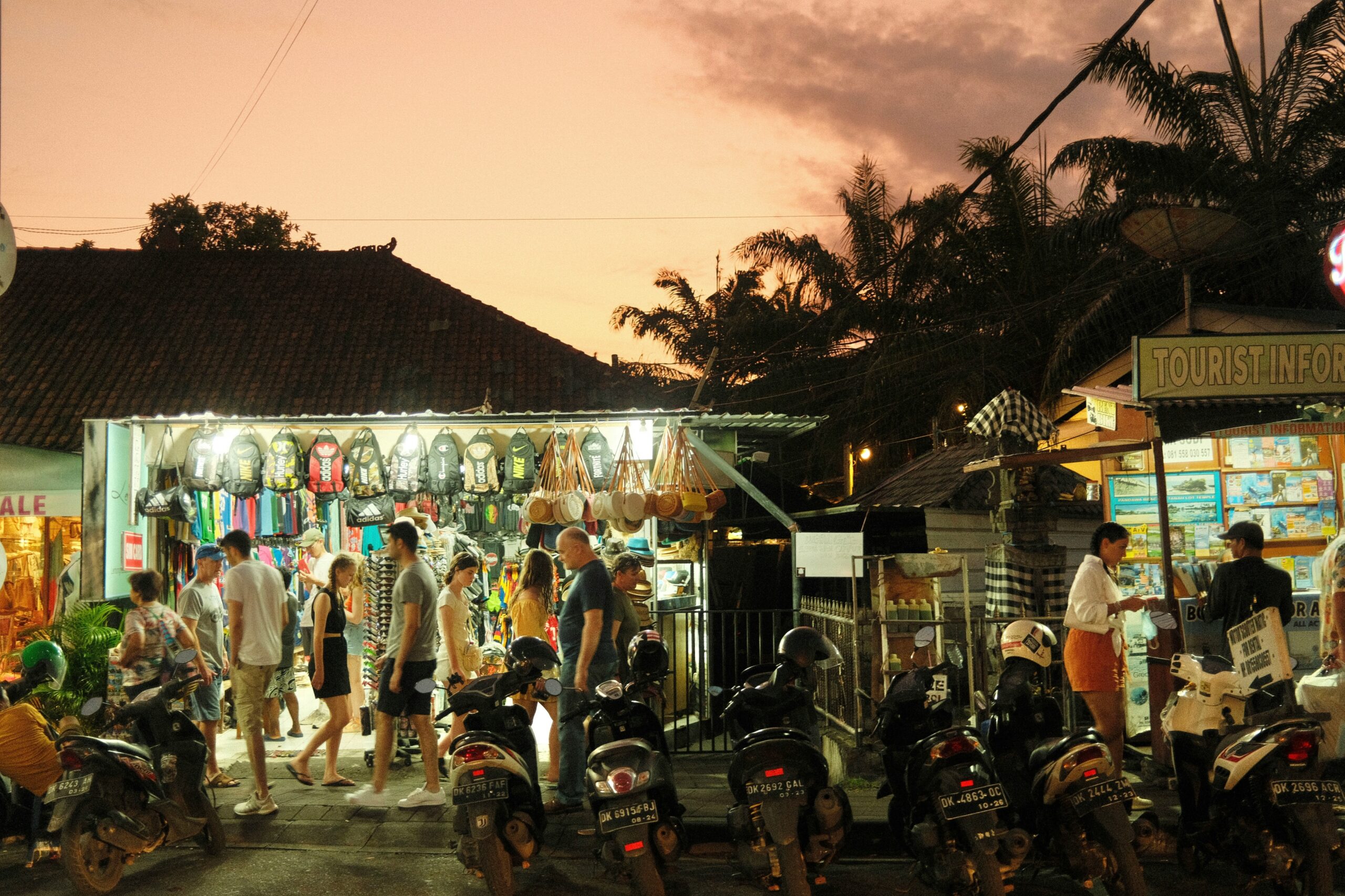
One of the first questions every tourist asks before landing in Bali is: how do I actually get around? Google “getting around Bali” and you’ll find a hundred articles that tell you to rent a scooter as if that’s the obvious answer for everyone. It isn’t. The right way to get around Bali depends entirely on who you are, where you’re going, and how comfortable you are navigating chaotic tropical traffic.
This honest 2026 guide breaks down every transport option available — with real prices, real trade-offs, and a clear decision framework so you stop second-guessing and start planning.
Getting Around Bali: Why There’s No One-Size-Fits-All Answer
Bali looks deceptively small on a map. In reality, traffic means a 30km journey can take over two hours during peak hours. Public transport barely exists. Roads in tourist areas are narrow, often potholed, and shared by scooters, trucks, dogs, and ceremony processions. Meanwhile some areas — parts of Ubud, Canggu, Uluwatu — are so spread out that walking is simply not an option.
The result: every tourist needs a transport strategy. Here are your five main options for getting around Bali in 2026.
Option 1: Scooter Rental — Freedom, But Not for Everyone
The scooter is the iconic Bali transport. It’s cheap, flexible, and honestly the fastest way to weave through Bali’s infamous traffic. Nothing beats the feeling of cruising down an empty rice terrace road at sunrise with wind in your face. But before you romanticise it, read this section carefully.
Scooter Rental Prices in Bali 2026
In 2026, scooter rental prices usually range from Rp60,000 to Rp250,000 ($4–$15) per day, depending on the scooter model. Here’s what that looks like by category:
- Standard automatic (Honda Beat, Scoopy, Vario 110-125cc): Rp60,000–Rp130,000/day — perfect for flat roads around Seminyak, Canggu, Kuta
- Mid-range (Yamaha NMAX, Honda PCX 150cc): Rp130,000–Rp200,000/day — comfortable for long-distance trips to Ubud or Uluwatu, with enough power to handle hills and carry a passenger with ease
- Adventure (Honda ADV 160): Rp200,000–Rp250,000/day — for those heading to the rougher roads of Amed or North Bali, the ADV offers superior suspension and a rugged build
- Weekly/monthly rental: weekly rates are 30–40% cheaper. Many long-term travelers report paying around Rp1.6 million ($100) per month for an NMAX if renting from local shops.
Delivery: Most scooter rental services in Bali offer free delivery to your hotel or villa, especially in popular tourist areas like Ubud, Canggu, Seminyak, and Kuta.
The Legal Reality: You Need a Proper License
This is the part most blogs gloss over. An International Driving Permit (IDP) is required — a car licence alone is not enough. The fine for riding without a licence is Rp1,000,000 (USD $60). More critically, if a dog runs out in front of your bike and you wipe out, your insurance provider will immediately demand a copy of your home motorcycle license and your IDP. If you don’t have them, your policy is instantly invalidated — you will be left paying for surgeries, hospital beds, and potentially medical evacuation out of your own pocket.
Bottom line: if you don’t have a motorcycle license back home, you technically cannot rent a scooter legally in Bali. Many tourists do it anyway — but they’re one pothole away from a five-figure medical bill.
Scooter Safety: What the Rental Shops Won’t Tell You
- Motorbike crashes are the leading cause of tourist hospitalizations in Bali.
- Always wear your helmet — it’s the law and it’s non-negotiable. In Bali, honking isn’t aggressive; a short beep means “I’m here” or “I’m passing you.” Use it often, especially on blind corners.
- Sunset Road — the bypass from the airport to Canggu — is where most serious tourist scooter accidents happen. Fast, unpredictable, full of trucks. Take the coast road, or use Grab instead.
- Loose sand on corners is the number one reason tourists slide out and crash. Take corners slowly. Never slam hard on the front brake.
- Never leave your passport as a deposit — use a cash deposit or a photocopy instead.
Scooter: Who Should Rent One?
✅ You’ve ridden a motorbike before and hold a valid license
✅ You’re traveling solo or as a couple
✅ You’re staying in one area (Canggu, Seminyak, Ubud) and exploring nearby
✅ You’re on a tight budget
✅ You want maximum flexibility — leave when you want, stop wherever
❌ You’ve never ridden a motorbike — Bali is absolutely not the place to learn. The chaotic intersections, stray dogs, and swarms of other drivers require split-second reflexes.
❌ You’re traveling with kids or elderly family members
❌ You have luggage — a suitcase, a second person, or anything sticking out wider than the handlebars is a bad idea
❌ You’re doing a full-day multi-stop trip across regions
Option 2: Private Car and Driver — The Underrated Sweet Spot
For many tourists, the best way to get around Bali is by hiring a private car and driver — especially if you’re in a group or traveling with kids. And the price might surprise you.
Private Driver Prices in Bali 2026
A comfortable, air-conditioned SUV costs around Rp500,000 to Rp700,000 ($35–$45 USD) for an entire 10-hour day. Split between two people, that’s Rp250,000–Rp350,000 each — cheaper than many Grab rides if you’re doing multiple stops. Some operators offer a full day Bali driver guide and tour for IDR 500,000 ($35 USD).
What’s typically included: driver, fuel, AC vehicle (4–7 seats). What’s usually not included: parking fees (Rp5,000–Rp20,000 per stop), toll roads, driver meals (etiquette: buy your driver lunch — it costs Rp25,000 and builds goodwill that pays off all day).
How to Find a Good Private Driver
- WhatsApp is king. Every driver in Bali uses WhatsApp — it’s the easiest way to share locations and keep in touch. Ask your accommodation to recommend one, then negotiate via WhatsApp before arrival.
- Book 24–48 hours ahead for popular dates. Good drivers get booked fast.
- Agree on the route in advance. Bali looks small on a map, but traffic means it can take two hours to go just 30km. Pick one area (e.g. East Bali) and explore it for the day.
- Confirm what’s included. Is fuel in the price? Parking? Entry fees?
- Pay at the end of the day, not upfront. A small deposit (Rp100,000–Rp200,000) for advance booking is fine.
Private Driver: Who Should Hire One?
✅ Families with kids or travelers with elderly parents
✅ Groups of 2–6 people splitting the cost
✅ Anyone doing a multi-stop day trip (temple + waterfall + rice terraces + dinner)
✅ Anyone uncomfortable on a scooter but wanting full flexibility
✅ First-time Bali visitors who want local knowledge built in
❌ Solo travelers on a very tight budget (the per-person cost is higher solo)
❌ Anyone staying in one neighborhood and only making short trips
Option 3: Grab and Gojek — Best for Short, Spontaneous Trips
As of 2026, the two dominant ride-hailing apps in Bali are Grab and Gojek. Think of them as the Uber of Southeast Asia — tap, confirm, your driver arrives. Both work for cars and scooter rides (called GrabBike / GoRide).
Grab vs Gojek: Which is Better in Bali?
Gojek tends to be cheaper for scooters and offers more services (food, massage, etc.), while Grab is often preferred by tourists for cars. In practice, download both and check prices for each trip — they fluctuate.
A 20-minute trip on a ride-hailing scooter usually costs under $2 USD. Car rides vary by distance but are generally Rp40,000–Rp150,000 for most in-town trips.
Important Limitations of Grab/Gojek in Bali
This is where most tourists get caught out:
- Some areas in Bali (like parts of Ubud or Canggu) are “Local Taxi Zones” where Grab and Gojek drivers are restricted from picking up passengers. In these spots, a pre-booked private driver is much less of a headache.
- Airport arrival: When arriving at the airport, you’ll need to log in to the airport WiFi and order from the main lobby before heading out to the official Grab pick-up point.
- Surge pricing during peak hours (sunset, Saturday nights, rainy season) can push prices 2–3x normal rate.
- Internet required. Download offline maps and have a local SIM card ready before you land.
Grab/Gojek: Who Should Use It?
✅ Short point-to-point trips (hotel to restaurant, beach to bar)
✅ Airport transfers when you’re traveling light
✅ Nights out when you don’t want to drive after a few drinks
✅ Anyone who wants zero planning and maximum spontaneity
❌ Full-day multi-stop itineraries (costs add up fast, and drivers may not wait)
❌ Areas with restricted pickup zones
❌ Anyone with a lot of luggage (book a car, not a bike)
Option 4: Metered Taxis — Reliable but Use Only Blue Bird
Bali has a notorious problem with unofficial taxi scams — drivers who refuse to use the meter, quote fixed prices 5–10x higher than normal, or take long routes. The solution is simple: only use Blue Bird taxis. Their cars are identifiable by the blue bird logo and light-blue color. They always use a meter, and drivers are trained and licensed. Download the MyBluebird app to book directly.
Metered taxis work best for: airport pickups (when Grab isn’t convenient), older travelers less comfortable with apps, and short-distance trips in South Bali (Kuta, Seminyak, Nusa Dua).
Option 5: Bicycle — For the Adventurous in the Right Areas
Bicycles are a legitimate option in specific areas — particularly Ubud, where several cafes and guesthouses rent them for Rp50,000–Rp80,000 per day. Cycling the back roads between rice fields and village temples is one of Bali’s most rewarding slow-travel experiences. But stick to quiet roads; main roads shared with trucks and buses are genuinely dangerous on a bicycle.
The Decision Framework: Which Vehicle is Right for You?
Answer these three questions to find your answer:
Question 1: Have you ridden a motorbike before and do you hold a valid license?
If No → eliminate the scooter completely. Your options are private driver, Grab/Gojek, or Blue Bird taxi.
If Yes → scooter is on the table. Continue to Question 2.
Question 2: Are you traveling solo or in a group?
Solo: Scooter (if licensed) or Grab/Gojek for individual trips.
Couple: Scooter together, or Grab car — cost is similar.
Group of 3–6: Private driver almost always wins on cost and convenience. Split Rp600,000 between four people = Rp150,000 each for a full day. Unbeatable.
Question 3: What kind of day are you planning?
Staying in one neighborhood, a few short trips: Grab/Gojek is perfect.
Full-day multi-stop itinerary (3+ destinations): Private driver is more cost-effective and stress-free.
Spontaneous solo exploring, no fixed plan: Scooter wins for flexibility.
One specific destination and back: Grab car or Blue Bird.
2026 Price Comparison at a Glance
| Transport | Cost | Best For | Watch Out For |
|---|---|---|---|
| Scooter rental | Rp60K–250K/day | Solo, licensed riders, budget travelers | License required, accident risk |
| Private driver | Rp500K–700K/day (whole car) | Groups, families, full-day trips | Parking/fuel not always included |
| Grab / Gojek | Rp15K–150K per trip | Short trips, nights out, airport | Restricted zones, surge pricing |
| Blue Bird taxi | Metered (Rp10K flag fall) | South Bali, older travelers | Only use Blue Bird — avoid others |
| Bicycle | Rp50K–80K/day | Ubud back roads, slow travel | Main roads are dangerous |
Getting Around Bali: Common Mistakes to Avoid
- Renting a scooter without a motorcycle license. It’s not just illegal — one accident and your travel insurance is void.
- Using a non-Blue Bird taxi. Unofficial taxis at the airport and tourist areas are notorious for overcharging. Walk past them to the official taxi counter or use Grab.
- Assuming Grab works everywhere. In Ubud’s center and parts of Canggu, local taxi zones mean the app can’t pick you up curbside. Pre-book your driver or walk to a nearby main road.
- Underestimating traffic. Always add 30–60 minutes buffer to any travel estimate, especially during sunset hours (4–7pm) when half of Bali is moving at once.
- Leaving your passport as a scooter rental deposit. Always refuse. Use cash or a photocopy.
- Not downloading Grab/Gojek before landing. Airport WiFi works, but setting up the app fresh while stressed and jet-lagged is no fun. Download and register at home.
The Verdict: How Most Smart Travelers Get Around Bali
The honest answer is that most experienced Bali travelers use a combination of transport depending on the day. A typical smart approach looks like this:
- Day 1 (arrival): Pre-booked private transfer from airport to accommodation
- Beach/café days in one area: Grab or Gojek for individual trips
- Full-day temple/waterfall itinerary: Private driver hired through accommodation
- Solo exploring if licensed: Scooter for the day
- Nights out: Grab home — never ride a scooter after drinking
The goal isn’t to pick one method and stick with it. It’s to match the right tool to each day’s needs — and know when the scooter romance isn’t worth the risk.
Heading to Bali and want more practical tips? Check out our guides on the best snorkeling spots in Bali and discover more Bali travel guides on the blog.
Which transport option did you end up using in Bali? Share your experience in the comments — especially any tips for navigating the restricted zones in Ubud and Canggu.












2 thoughts on “Getting Around Bali 2026: Scooter, Car or Grab — Which?”