Blog
Balinese Greetings: Essential Words and Phrases for Travellers (2026)

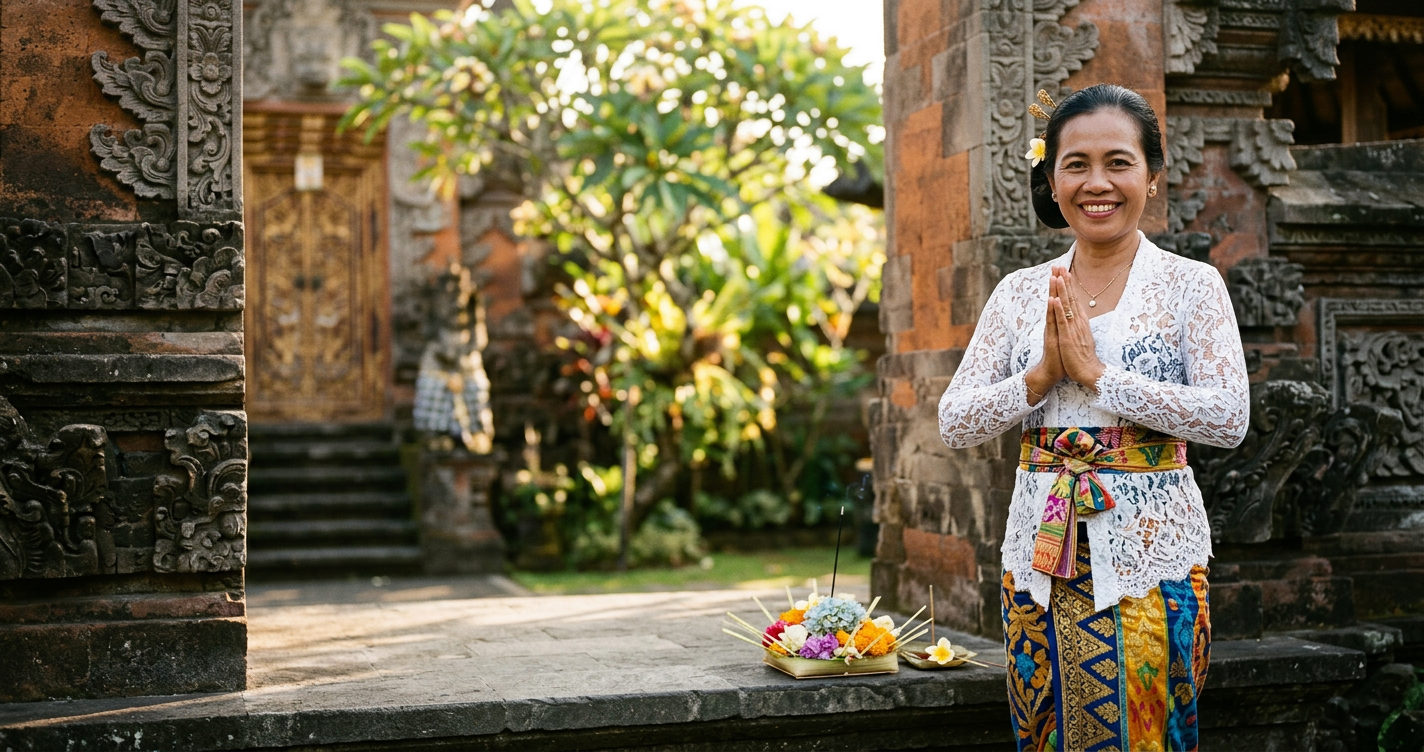
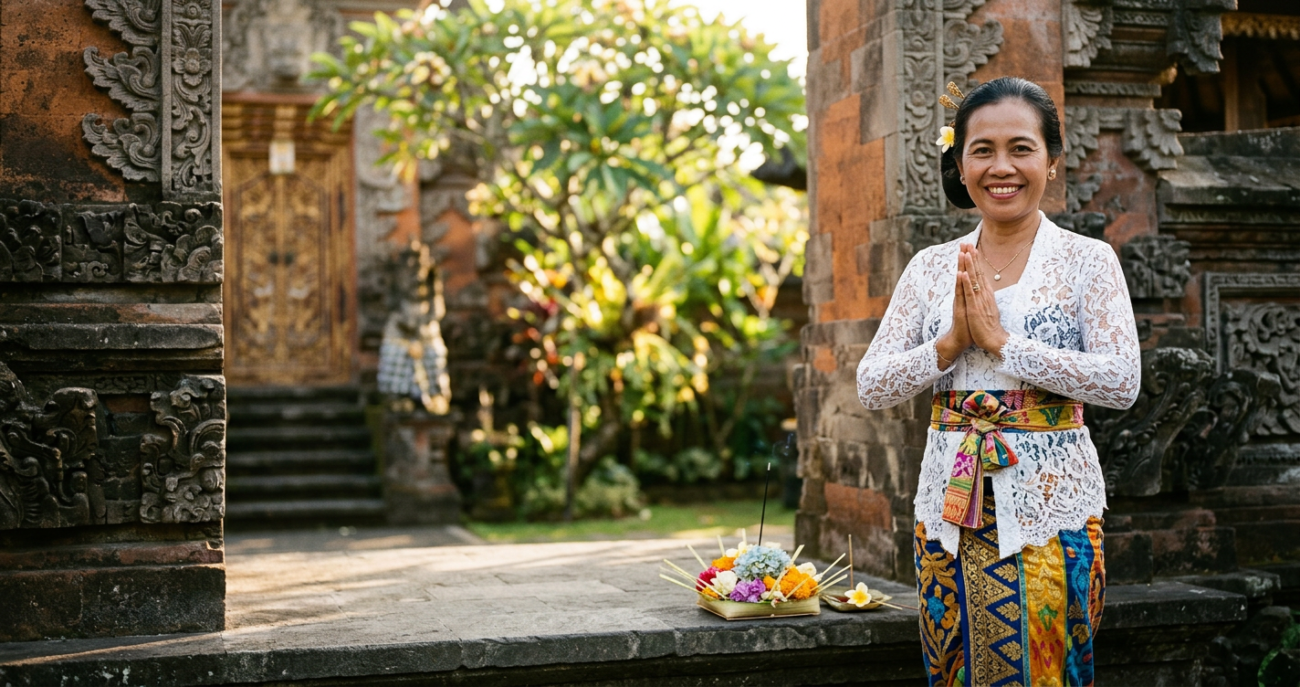
Say “Om Swastiastu” to a Balinese shopkeeper, driver or homestay owner and watch what happens. Their face lights up, their hands come together at the chest, and they say it right back to you. A few local words will not make you fluent, but in Bali they open doors faster than anything else you can pack.
This guide covers the Balinese greetings travellers actually use: how to say hello, good morning and thank you, how to address people politely, what to say to someone dressed for a temple ceremony, and the small gestures that go with the words.
Balinese or Indonesian: which should you use?
Almost everyone in Bali speaks Indonesian (Bahasa Indonesia), and in tourist areas many people speak good English. Balinese (Basa Bali) is the language people use at home, in the village and at the temple. You do not need it to get around, but using a Balinese word instead of the Indonesian one shows you have taken an interest in local culture, and people notice.
Balinese also has speech levels: a refined, polite register for elders, priests and people you do not know, and an everyday register between friends. As a visitor, stick to the polite words below and you will never go wrong.
Om Swastiastu: the Balinese hello
Om Swastiastu (say it om swas-tee-AS-too) is the traditional Balinese Hindu greeting. It is a short blessing that roughly means “may you be well, by the grace of God”. You can use it at any time of day, with anyone. The reply is the same: Om Swastiastu.
It is usually said with the palms pressed together in front of the chest and a slight nod. You will hear it at the start of speeches and ceremonies and when you arrive at a family compound.
The matching farewell, used to close a speech or a formal visit, is Om Shanti Shanti Shanti Om, a wish for peace. For an everyday goodbye, a smile and “suksma” (thank you) is enough.
Good morning, good evening and welcome
The polite Balinese word for “good” or “happy” in a greeting is rahajeng (ra-HA-jeng). Add the time of day after it:
| Balinese | Meaning | When to use it |
|---|---|---|
| Rahajeng semeng | Good morning | Sunrise until about 11 am |
| Rahajeng tengai | Good day | Around midday |
| Rahajeng sanja | Good afternoon / evening | Late afternoon until dark |
| Rahajeng wengi | Good night | After dark |
| Rahajeng rauh | Welcome | You will see it on signs and hear it when you arrive |
Thank you, sorry and other words you will use every day
| Balinese | Meaning |
|---|---|
| Suksma | Thank you |
| Suksma pisan | Thank you very much |
| Matur suksma | Thank you (more formal, for elders and hosts) |
| Ampura | Sorry / excuse me |
| Nggih | Yes (polite) |
| Durus | Please, go ahead (offering food or a seat) |
| Sapunapi gatra? | How are you? (polite, for elders and people you have just met) |
| Kenken kabare? | How are you? (casual, between friends) |
| Becik | Good / fine |
| Tiang | I, me (polite) |
| Pisan | Very |
If you only remember two words, make them Om Swastiastu and suksma.
How to address people: Bli, Mbok, Gus and Geg
Balinese people rarely use first names on their own. Instead they put a friendly title in front, much like “brother” or “sister”. These are the ones you will hear most:
- Bli: “older brother”. The everyday way to address a man around your age or a bit older, such as your driver or a waiter. “Suksma, Bli!”
- Mbok: “older sister”. The same for a woman.
- Gus: for a boy or young man. It comes from bagus, “handsome”.
- Geg: for a girl or young woman. It comes from jegeg, “beautiful”.
- Jero Mangku: for a temple priest (pemangku). Always use the title, never the name alone.
- Pak and Bu: Indonesian for “sir” and “madam”. Safe and respectful for older people, officials and anyone you are unsure about.
Some families also use caste titles such as Ida Bagus (men) and Ida Ayu, often shortened to Dayu (women). If someone introduces themselves that way, use the title they give you.
Why so many people are called Wayan, Made, Nyoman or Ketut
Most Balinese are named after their birth order. The first child is Wayan, Putu or Gede; the second is Made, Kadek or Nengah; the third is Nyoman or Komang; the fourth is Ketut. After the fourth child the cycle starts again. That is why your guide, your driver and the woman at the warung may all be called Made. Asking “Bli Made?” is perfectly normal. Our guide to Balinese names and castes explains the system in more detail.
What to say to someone going to a temple ceremony
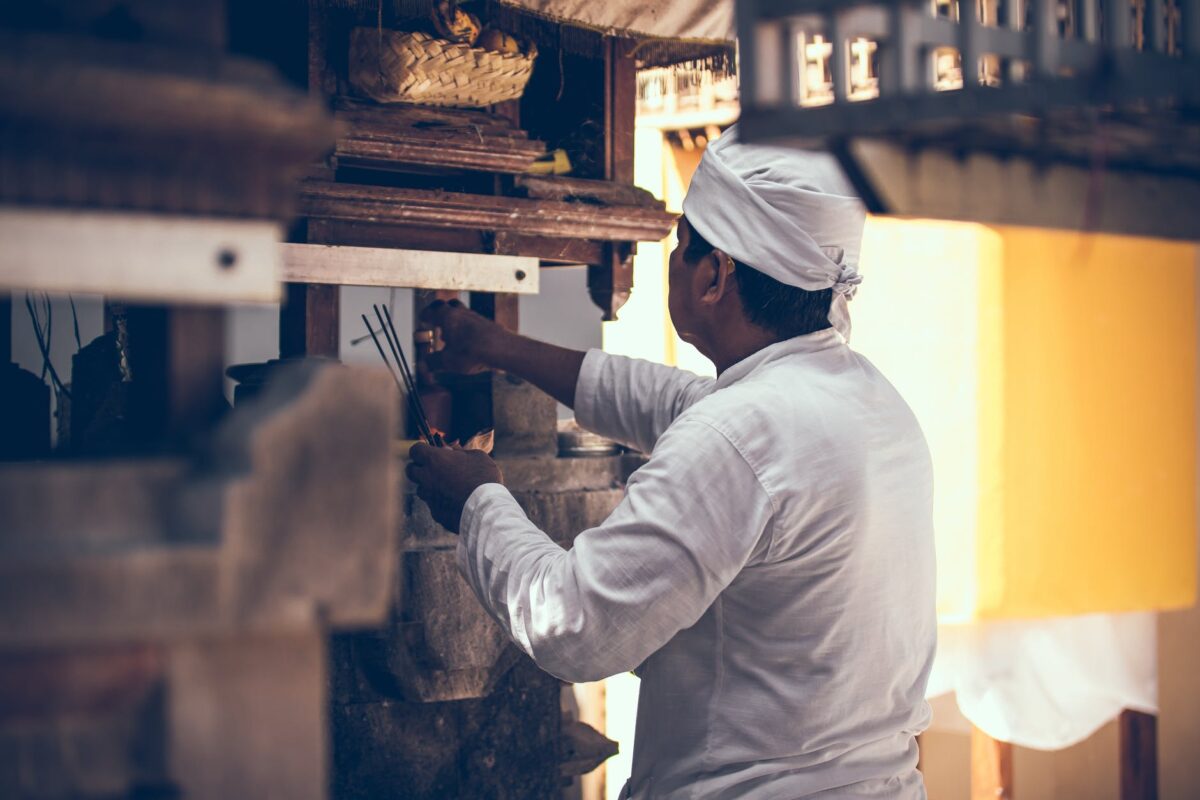
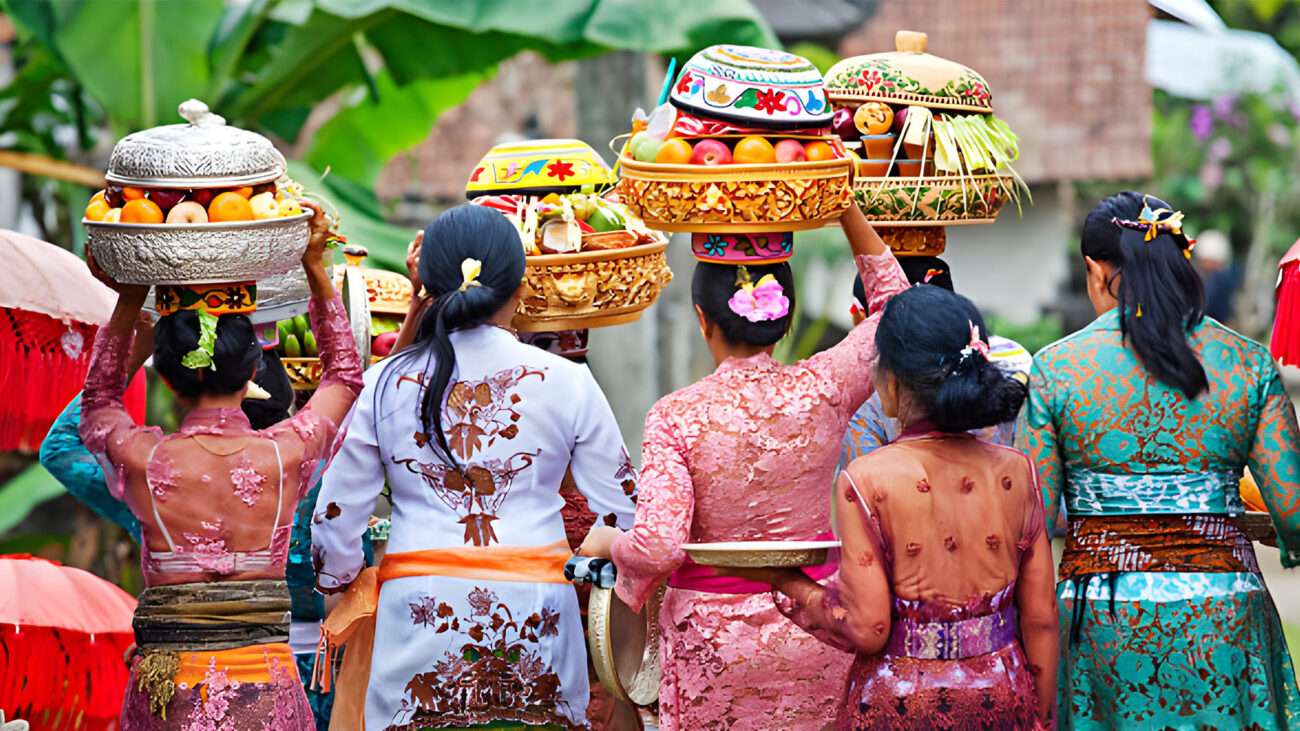
Ceremonies happen almost every day in Bali, and you will often meet friends, hosts or staff dressed in their temple clothes: a sarong (kamen), a sash, and for men a headcloth (udeng). If you want to say something kind, keep it simple:
- “Om Swastiastu” with your palms together is always appropriate.
- To compliment a woman or girl on her outfit: “Jegeg pisan!” (“Very beautiful!”). For a man or boy: “Bagus pisan!” (“Very handsome!”). This is warm and friendly, and Balinese families love hearing it from visitors.
- To wish them well, the Indonesian “Selamat sembahyang” (“have a good prayer”) is widely used and understood. In English, “Have a beautiful ceremony” is just as welcome.
- During Galungan and Kuningan, Bali’s biggest holiday period, the greeting is “Rahajeng Galungan lan Kuningan”.
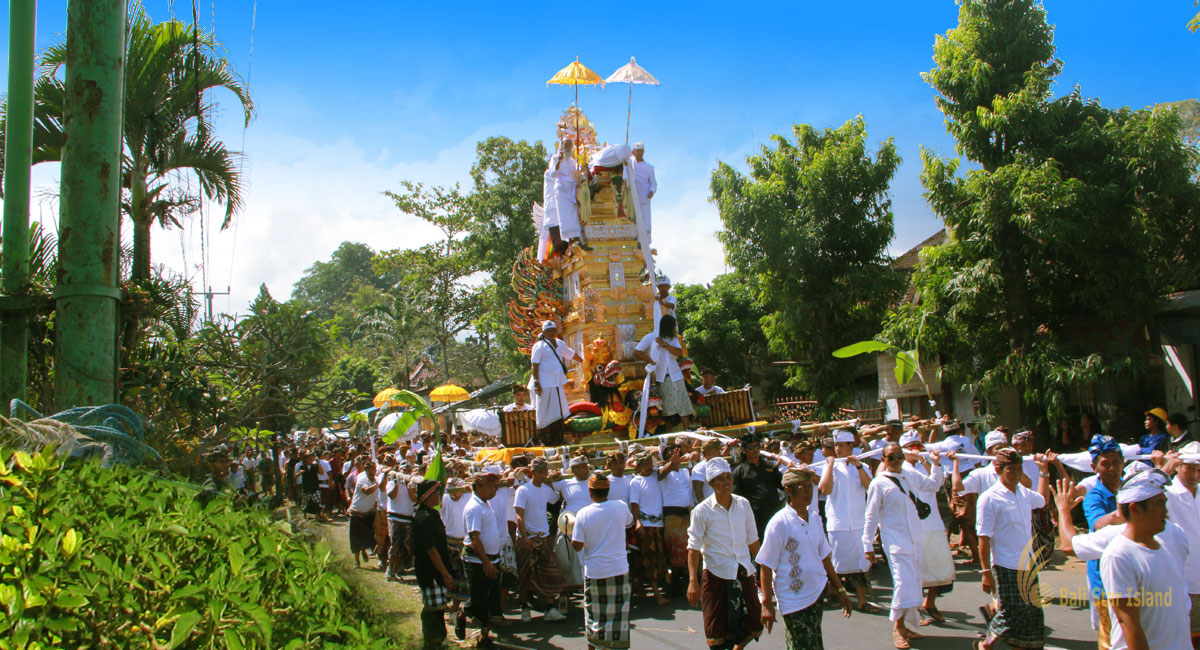
If you are invited to join a ceremony yourself, read our Bali temple etiquette guide first for what to wear and how to behave, and see traditional ceremonies in Bali for what each one means. A cremation is a special case, covered in our Balinese cremation ceremony guide.
The gestures that go with the words
- Palms together. Pressing your hands together at the chest with a small nod is the respectful way to greet, thank or say goodbye, especially to elders and priests.
- Use your right hand. Give and receive money, food and gifts with the right hand, or with both hands for something important.
- Do not touch anyone’s head. The head is considered the most sacred part of the body, even on children.
- Point with your thumb, not your finger. Pointing with the index finger is seen as rude.
- Smile and stay calm. Raising your voice or showing anger in public causes embarrassment for everyone. A smile and patience will get you much further.
A short conversation to practise
You: Om Swastiastu, Bli!
Driver: Om Swastiastu! Kenken kabare?
You: Becik, suksma. (Fine, thank you.)
Driver: Durus, please get in.
You (at the end of the ride): Suksma pisan, Bli!
That is all it takes. Your accent does not matter; the effort does. Use these Balinese greetings on your trip and you will feel the difference in every warung, temple and village you visit.