Blog
Redite Umanis Ukir: The Profound Meaning and History Behind This Balinese Hindu Tradition

Redite Umanis Ukir is a sacred day in the Balinese Pawukon calendar that holds deep spiritual significance as a day of worship dedicated to Bhatara Guru. This holy day occurs every 210 days (every six months) and forms part of the traditional calendar system that has been deeply embedded in Balinese Hindu society for centuries.
Understanding the Components of Redite Umanis Ukir
The Naming Structure
Redite Umanis Ukir consists of three main components within the Pawukon calendar system:
- Redite – derives from the Saptawara system (seven-day week), meaning Sunday
- Umanis – comes from the Pancawara system (five-day week), representing one of five market days (Paing, Pon, Wage, Kliwon, Umanis)
- Ukir – represents the name of the third wuku (week) in the 30-week cycle, under the guardianship of Dewa Mahayeki
The combination of these three elements creates a particularly special day in the Balinese Hindu calendar, where each component carries its own spiritual meaning and influence.
Historical Origins of the Pawukon System
Historical Background
The Pawukon calendar system that underpins Redite Umanis Ukir has a lengthy history rooted in the Medang Kamulan tradition (Ancient Mataram) of Java. Evidence of this system’s usage is recorded in the Prasasti Lintakan dated 841 Saka (919 CE), demonstrating that Pawukon has been used as a time-calculation guide for over a thousand years.
The adoption of the Pawukon system in Bali flourished during the Dinasti Warmadewa period, particularly through the marriage of Mahendradatta to Raja Udayana, which brought strong Javanese traditional influences to Bali. According to the Lontar Medang Kamulan (from the Gedong Kirtya collection), the use of the Pawukon system in Bali directly references the Pawukon tradition from Medang Kamulan.
Mythology and Legends
The wuku system within Pawukon is closely linked to ancient Javanese mythology, particularly the tale of Prabu Watugunung, a king from the Gilingwesi kingdom. The names of the 30 wuku are taken from characters in this story, including Prabu Watugunung himself, his queen Dewi Sinta, and their 27 children.
Wuku Ukir is specifically associated with Raja Giriswara, who according to tradition was one of the figures in this royal family. The name “Ukir” itself carries philosophical meaning related to the art of carving or engraving, symbolising the process of refined character and spiritual formation.
The Spiritual Significance of Bhatara Guru
The Concept of Bhatara Guru in Indonesian Hinduism
Bhatara Guru (also called Bhattara Guru or Batara Siwa) is the supreme deity in Indonesian Hinduism, with a name derived from the Sanskrit Bhattaraka meaning “noble lord”. In the Southeast Asian context, Bhatara Guru is conceptualised as a spiritual teacher, the first teacher of all teachers in Indonesian Hindu texts.
Bhatara Guru is regarded as a form of Rudra-Shiva, a creator deity in mythology found in Javanese and Balinese Hindu texts, in a manner similar to mythology related to Brahma in India. In Indonesian Hinduism, Bhatara Guru is the supreme deity, much like Jupiter was in Roman times.
Role in Balinese Tradition
In Balinese Hindu tradition, Bhatara Guru is a manifestation of Hyang Widhi Wasa who provides guidance to his descendants. According to the Lontar Usana Dewa, Bhatara Guru resides at the Sanggah Kemulan as Sang Hyang Atma.
The Lontar Usana Dewa states:
“Ring Kamulan ngaran Ida Sang Hyang Atma, ring Kamulan tengen bapa ngaran paratma, ring Kamulan kiwa ibu ngaran Sang Hyang Siwatma, ring Kamulan tengah ngaran raganta, metu Brahmadadi meme bapa meraga Sang Hyang Tuduh”
This translates to: “In Kamulan is called Sang Hyang Atma, in the right space of Pelinggih Kamulan is the father called Sang Hyang Paratma, in the left space of Kamulan is the mother called Sang Hyang Siwatma, in the central space of Kamulan our soul becomes Brahma as mother and father becoming Sang Hyang Tuduh”.
Rituals and Ceremonies of Redite Umanis Ukir
Offerings and Devotions
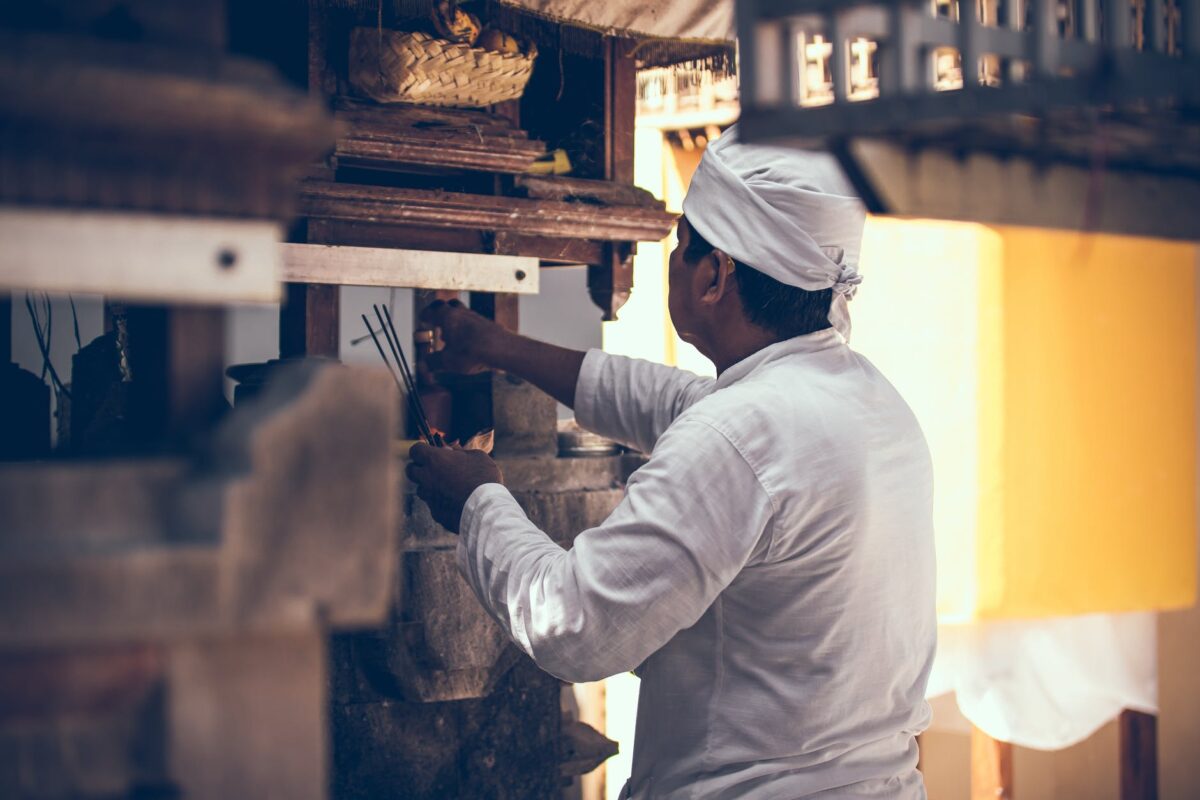
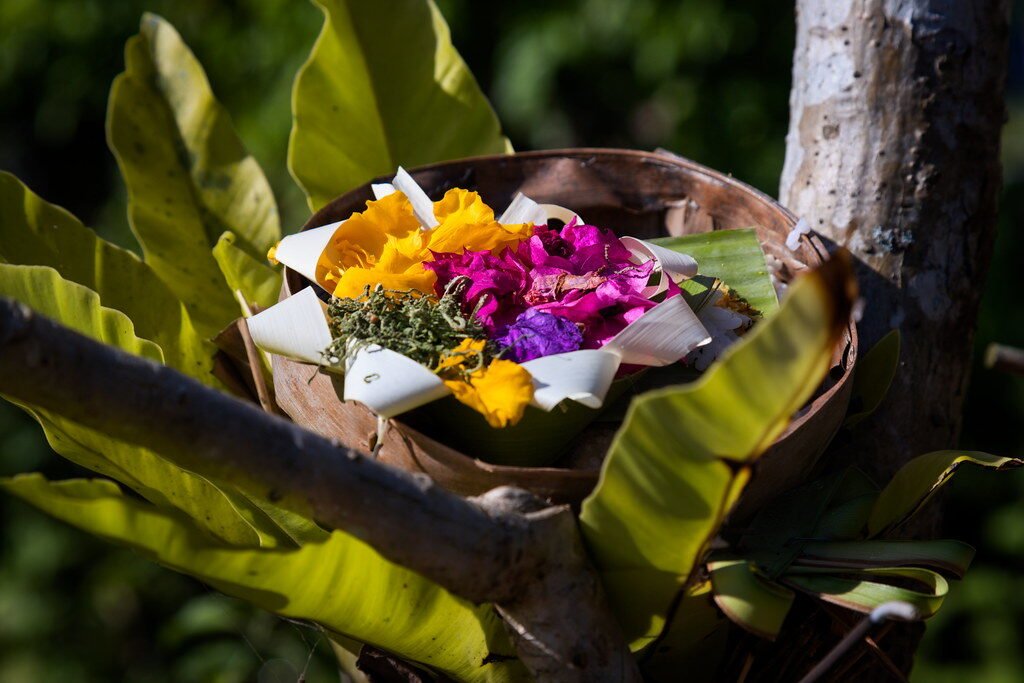
On Redite Umanis Ukir, Balinese Hindus perform special prayers with upakara that have been established according to the Lontar Sundarigama:
- Sesayut pengambeyan – 1 piece
- Sedah ing apon – betel leaves with lime, 25 pieces
- Kwangen – 8 pieces
These offerings are presented at the Sanggah Kemulan and can be supplemented with other materials according to one’s capacity, following the principles of desa, kala, and patra (place, time, and circumstances).
Philosophy of Worship
Worship on this day carries profound meaning as an endeavour to:
- Seek spiritual guidance from Bhatara Guru as the true teacher
- Obtain spiritual enlightenment so that life becomes peaceful
- Honour ancestors who have returned to their original Kamulan
Character and Personality Influences
Characteristics of Those Born on Redite Umanis Ukir
According to the wariga system (character calculation based on birth day), people born on Redite Umanis Ukir have specific characteristics:
Positive Traits:
- Calm and light-hearted in temperament
- Intelligent and interested in mystical knowledge
- Gentle in character and compassionate
- Generous, willing to sacrifice, and charitable
- Skilled at keeping secrets
- Literary talent and enjoys helping others
Negative Traits:
- Sometimes rather arrogant and enjoys praise
- Likes to mock and enjoys arguing
- Good only in words, but rigid at heart
- Stubborn and greedy
- Enjoys meddling in others’ affairs
The Influence of Wuku Ukir
Wuku Ukir is under the guardianship of Dewa Mahayeki, providing specific influences on personality:
- Lacks perseverance in character, always uncertain in decisions
- Sometimes easily influenced
- However, has refined feelings, generous with noble character
- Dignified, lives peacefully, with adequate sustenance
- Diligent in work and obedient to superiors’ commands
Relevance in Modern Life
Contemporary Functions
Despite originating from ancient traditions, Redite Umanis Ukir and the Pawukon system as a whole remain highly relevant in modern Balinese Hindu life. This day functions as:
- Otonan – a spiritual birthday for those born on this day, celebrated every 210 days
- Spiritual guidance – a time for reflection and strengthening one’s relationship with God
- Ritual time marker – part of a larger cycle of religious ceremonies
Integration with Modern Calendars
The Pawukon system, including the calculation of Redite Umanis Ukir, has been integrated with modern calendars through Balinese paper calendars that display Gregorian, Pawukon, and Saka dates simultaneously. This enables Balinese people to maintain their spiritual traditions whilst adapting to modern life.
Conclusion
Redite Umanis Ukir represents the spiritual and intellectual wealth of Nusantara civilisation that has endured for over a thousand years. This holy day functions not merely as a time marker, but also as a medium for understanding the relationship between humans, nature, and the Almighty God.
The existence of this tradition demonstrates extraordinary cultural continuity, where ancient spiritual values remain relevant and meaningful in the context of modern life. Redite Umanis Ukir with its worship of Bhatara Guru serves as a reminder of the importance of spiritual guidance and enlightenment in living a peaceful and meaningful life.
As part of world cultural heritage, the Pawukon system and holy days such as Redite Umanis Ukir deserve to be preserved and understood not only by Balinese Hindus, but also by society at large as part of humanity’s civilisational wealth.