Blog
Types of Balinese Wood Used in Handicrafts (and What Each Is Good For)

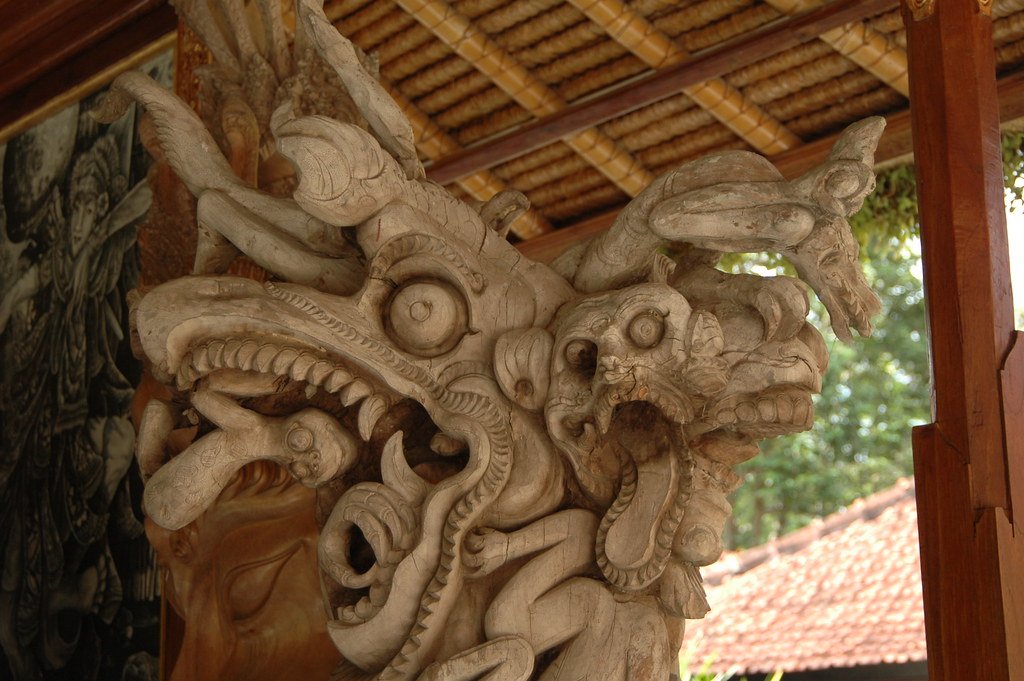
Walk through any craft village in Bali and you will smell it before you see it: fresh wood shavings, sometimes sweet, sometimes sharp. Balinese carvers choose their wood as carefully as a cook chooses ingredients. Each species has its own colour, weight, grain and personality, and the right choice decides whether a piece is light enough to hang on a wall, strong enough to stand in a garden, or fine enough to hold the tiny details of a Barong mask.
In our family workshop in Kayubihi, Bangli, we have worked with bamboo and wood since 1998. This guide explains the woods you are most likely to meet in Balinese handicrafts, what each one is good for, and what to look for when you buy.
Why the choice of wood matters
Wood is not just a material, it is the starting point of the design. Before a carver picks up a chisel, three questions decide which wood to use:
- Weight and use. A mask that is worn in a dance must be light. A table or a garden statue must be heavy and stable.
- Detail. Fine, even-grained woods hold sharp edges and small details. Coarse woods are better for bold shapes.
- Finish. Some woods are beautiful left natural and oiled. Others are usually painted, gilded or stained.
Most of the woods below are carved while still slightly fresh, then dried slowly in the shade so they do not crack in Bali’s heat and humidity.
Common woods in Balinese handicrafts
Jackfruit wood (nangka)
Jackfruit trees grow in many Balinese home gardens, and their wood is a favourite for carving. Fresh jackfruit wood has a warm yellow to golden colour that slowly deepens to a honey or reddish brown over the years. It is medium-hard, carves cleanly and takes oil well, which is why you often see it in natural-finish statues, bowls and relief panels.
Teak (jati)
Teak is one of the best-known tropical hardwoods. It is dense, naturally oily and very resistant to moisture and insects, so it is the classic choice for furniture, doors, outdoor pieces and building parts. It is heavier and harder to carve than softer woods, so it is used more for strong, practical objects than for fine miniature work. Teak is also used in traditional Balinese buildings.
Suar wood (rain tree)
Suar is the Balinese name for the rain tree or monkeypod, Samanea saman. It grows fast into a large tree, so it gives wide slabs that are perfect for big bowls, tray tables, wall panels and large sculptures. The wood is strong and works well with chisels, and when polished it shows a lively contrast between light and dark tones.
Albesia
Albesia is a very light, pale and fast-growing wood. Because it is soft and inexpensive, it is widely used for colourful painted souvenirs, small animal figures, fruit carvings and decorative masks. Its pale surface is an ideal base for bright paint.
Hibiscus wood
Wood from the hibiscus tree (waru) is light and fairly soft. Balinese carvers like it for sculptures where the natural two-tone colour of the wood becomes part of the design, often combined with carefully polished finishes.
Crocodile wood
Crocodile wood is the local name for a wood with a striking pattern that reminds people of crocodile skin. Carvers use its uneven texture and colour to create expressive, organic sculptures where the grain is part of the artwork.
Mahogany and sandalwood
Mahogany is used for furniture and solid decorative carvings thanks to its reddish-brown colour and stability. Sandalwood is precious and fragrant, so it appears in small, special pieces such as fine figures and boxes rather than in large items.
Cempaka
Cempaka (Michelia champaca) is the tree of the fragrant cempaka flower that is offered in Balinese ceremonies. Its wood is light in colour, durable and respected, and it has traditionally been chosen for sacred and ceremonial objects as well as quality building parts.
Where bamboo fits in
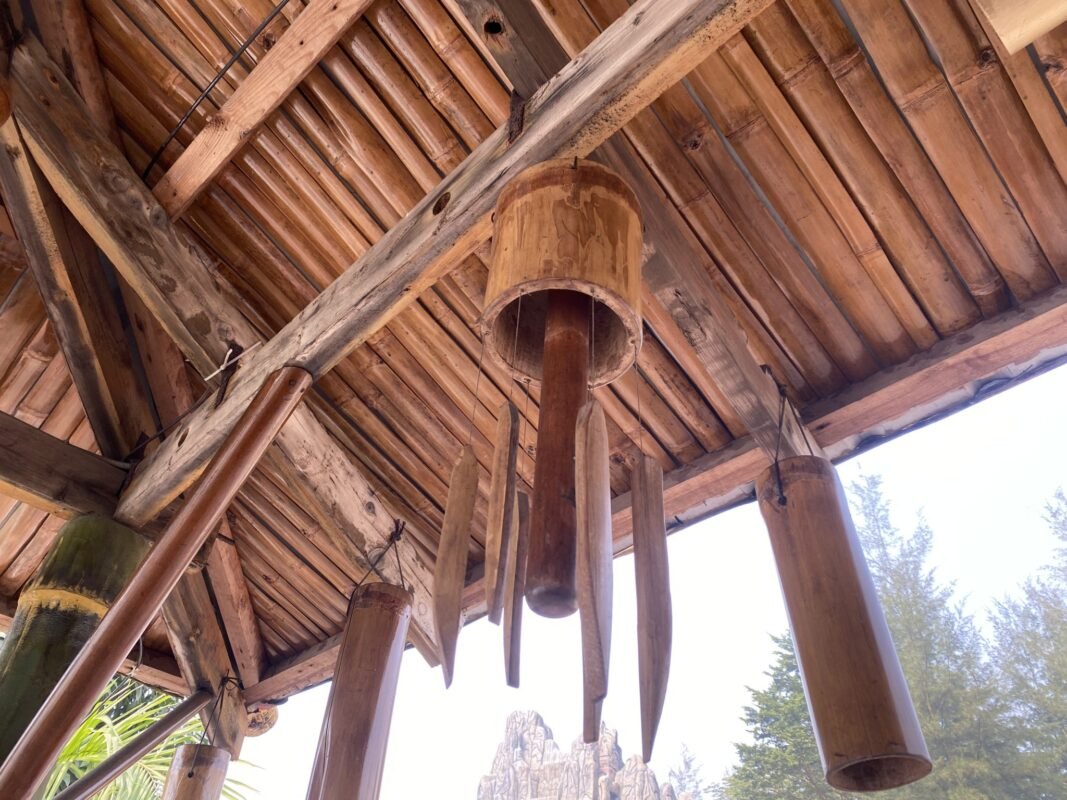
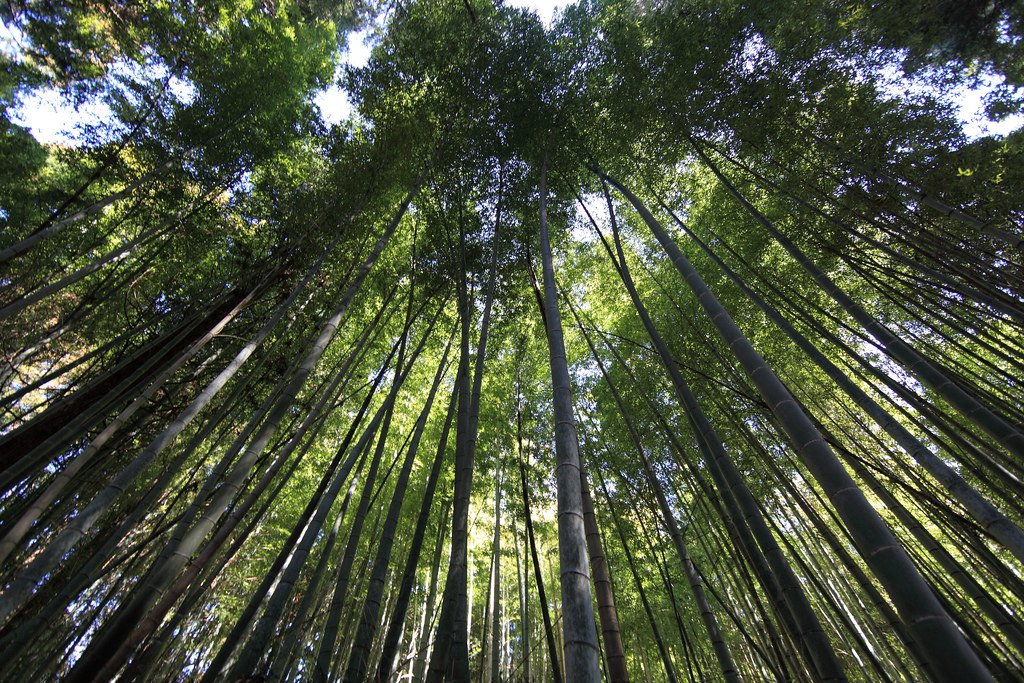
Bamboo is technically a giant grass, not a tree, but in Bali it lives side by side with wood in every workshop. It is light, strong and grows back quickly, which makes it a sustainable material. In our village bamboo is used for wind chimes, baskets, flutes and small furniture, while wood is used for the parts that need weight and fine carving, such as the tops of our chimes and carved decorations.
How to choose a good wooden piece
- Look at the grain. Natural-finish pieces should show clear, even grain without large cracks.
- Check the weight. Heavier pieces of the same size usually mean denser, more durable wood.
- Check the joints. On furniture and chimes, parts should fit tightly and sit straight.
- Ask about drying. Properly dried wood is less likely to crack when it travels to a drier or colder climate.
- Ask about the finish. Oil, wax, paint and varnish all need slightly different care.
Wood and sustainability
Many of the woods used in Balinese crafts, such as albesia, suar and jackfruit, come from fast-growing or garden trees, and bamboo grows back within a few years. Using these local materials and making things to last are the most practical ways a small workshop can respect the environment that gives us our materials.
Frequently asked questions
Which Balinese wood is best for outdoor use?
Teak is the most reliable choice for outdoor furniture and garden pieces because it is dense, naturally oily and resistant to moisture and insects. Softer woods such as albesia or hibiscus are better kept indoors or under a covered veranda.
Why do some wooden pieces change colour over time?
Many woods darken or mellow as they are exposed to light and air. Jackfruit wood, for example, starts golden yellow and slowly turns a deeper honey or reddish brown. This is a natural ageing process and is part of the charm of handmade wood.
Is a heavier carving always better?
Not always. A heavy piece usually means a denser, more durable wood, which is ideal for furniture and large statues. For masks, wall hangings and items you want to move easily, a light wood such as albesia or hibiscus is the better choice.
Can wood crack after it arrives in another country?
Wood that was not dried properly can crack when it moves to a drier or colder climate. Choosing well-dried pieces, keeping them away from heaters and letting them adjust slowly indoors for a few days greatly reduces the risk.
Explore our bamboo and wooden crafts
Baliamerta is a family workshop founded by I Nyoman Tuwi in Kayubihi, Bangli, with more than 10 local craftsmen and craftswomen. We supply exporters and also sell directly. Browse our wooden products and bamboo products, read our story, or ask about wholesale orders.