Blog
Ubud One Day Itinerary: The Perfect Day in Bali’s Cultural Heart (2026)

Most people who plan an Ubud one day itinerary make the same mistake: they try to see everything. Rice terraces, three waterfalls, a jungle swing, a coffee plantation, four temples, the Monkey Forest and a cooking class — all before dinner. They spend the day in a car on narrow one-way roads and go home having seen Ubud mainly through a windscreen.
This itinerary takes the opposite approach. It is built around timing, not quantity. Every stop is placed at the hour when it is at its best — the rice terraces before the tour buses, the water temple while the air is still cool, the Monkey Forest in the softer afternoon light, and the royal palace at night when the gamelan starts. You will see fewer places than the “15 things in one day” articles promise, and you will actually enjoy all of them.
Below you will find the full hour-by-hour plan, honest 2026 entrance prices, how to get around, what to wear, what it all costs, and the mistakes that ruin most first days in Ubud.
Ubud One Day Itinerary at a Glance
| Time | Stop | Why this time |
|---|---|---|
| 06:00 – 07:00 | Campuhan Ridge Walk (optional) | Cool, quiet, golden light |
| 07:30 – 09:00 | Tegallalang Rice Terrace | Before the 10:00 bus wave |
| 09:30 – 11:00 | Tirta Empul Water Temple | Calmer pools, cooler air |
| 11:30 – 13:00 | Lunch back in Ubud | Warungs are at their freshest |
| 13:00 – 14:00 | Ubud Palace & Pura Taman Saraswati | Both free, both in the centre |
| 14:00 – 15:15 | Ubud Art Market | Stalls are fully open |
| 15:30 – 17:00 | Sacred Monkey Forest | Shade, softer light, last entry 17:00 |
| 17:30 – 19:00 | Dinner | Beat the evening rush |
| 19:30 – 21:00 | Legong dance at Ubud Palace | Nightly performance |
Before You Start: How to Get Around Ubud in One Day
The morning of this itinerary happens outside central Ubud — Tegallalang is roughly 9 km to the north and Tirta Empul is further north-east in Tampaksiring. The afternoon happens inside central Ubud, where everything is within walking distance.
That shape gives you the easiest plan:
- Morning: hire a private driver for a half day. A driver who knows the one-way system saves you an enormous amount of time. Expect to pay roughly IDR 600,000–800,000 for a full day with car and fuel; half-day rates are lower. Agree the price and the stops before you get in.
- Afternoon: walk. The palace, the market, Pura Taman Saraswati and the Monkey Forest all sit along Jalan Raya Ubud and Jalan Monkey Forest.
- Scooter? Only if you hold a valid international licence with a motorcycle endorsement and are genuinely confident in heavy traffic. Ubud’s hills and one-way loops are not a place to learn.
For a full breakdown of transport options, prices and apps, read our guide to getting around Bali.
06:00 — Optional Sunrise: Campuhan Ridge Walk
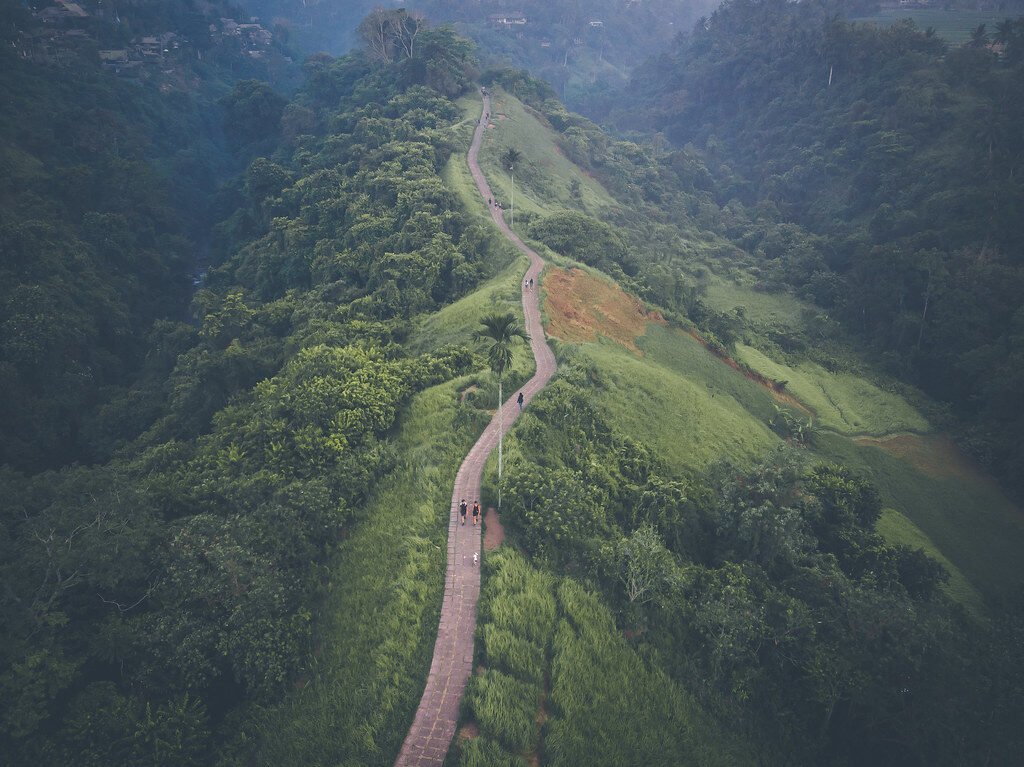
If you are an early riser, start the day on the Campuhan Ridge Walk, a paved path that follows the spine of a grassy ridge between two river valleys on the western edge of Ubud. It is free, it takes about an hour there and back at an easy pace, and at sunrise it is one of the most peaceful places on the island.
The walk begins near the Warwick Ibah hotel, where a small path leads down past Pura Gunung Lebah — a temple built at the meeting point of two rivers, which is exactly what “campuhan” means. After 9:00 the ridge has no shade at all and becomes very hot, which is why it belongs at the beginning of the day, not the middle.
Skip it if: you arrived in Bali yesterday and are still jet-lagged. The rest of the day is full enough without it.
07:30 — Tegallalang Rice Terrace
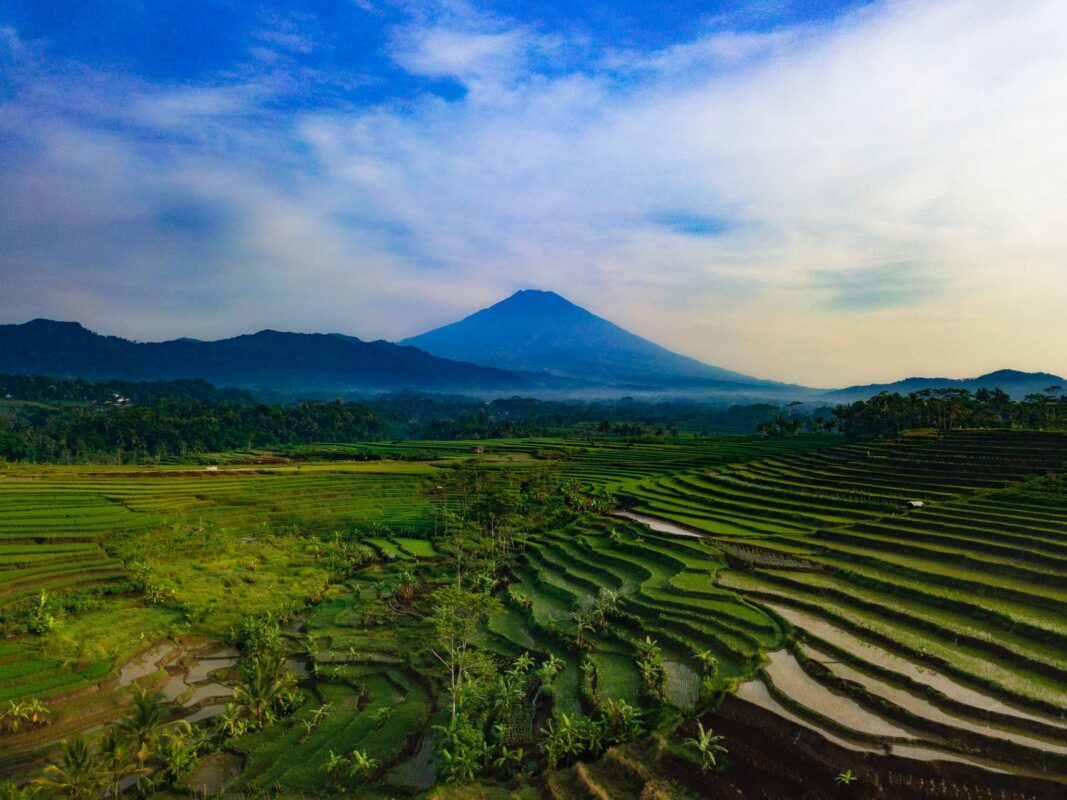
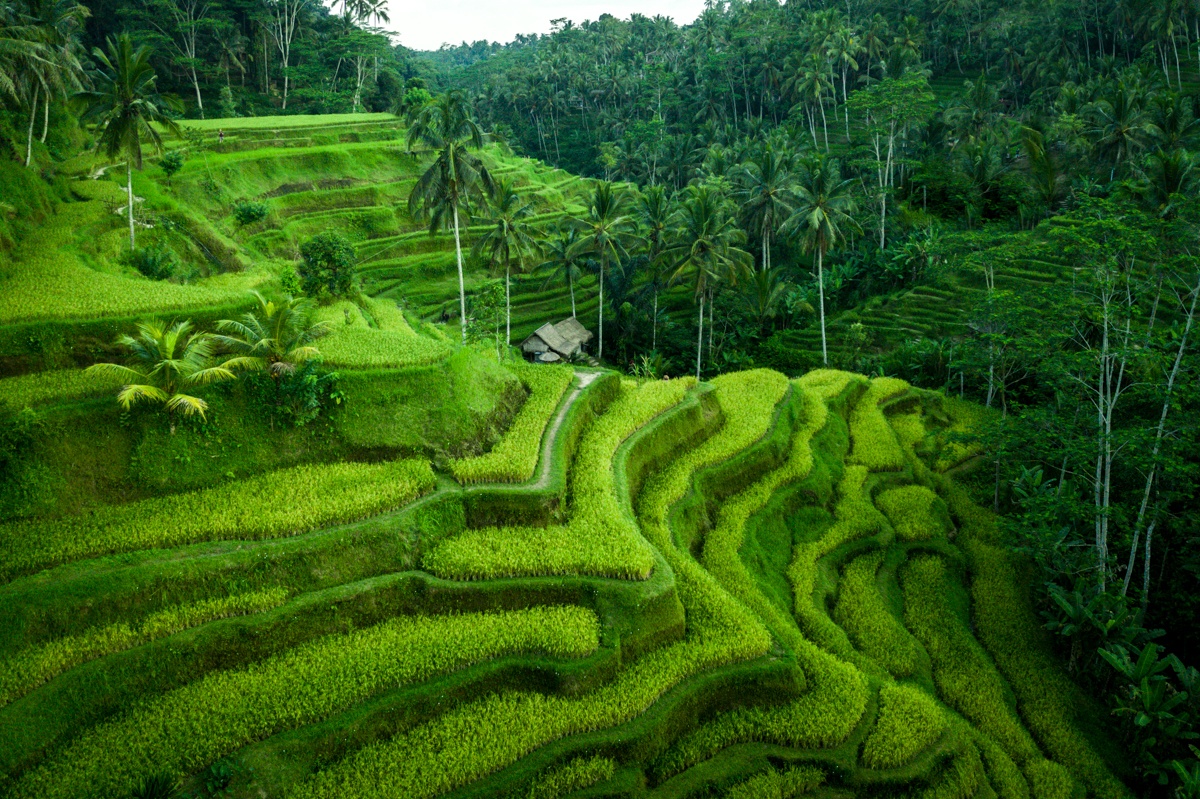
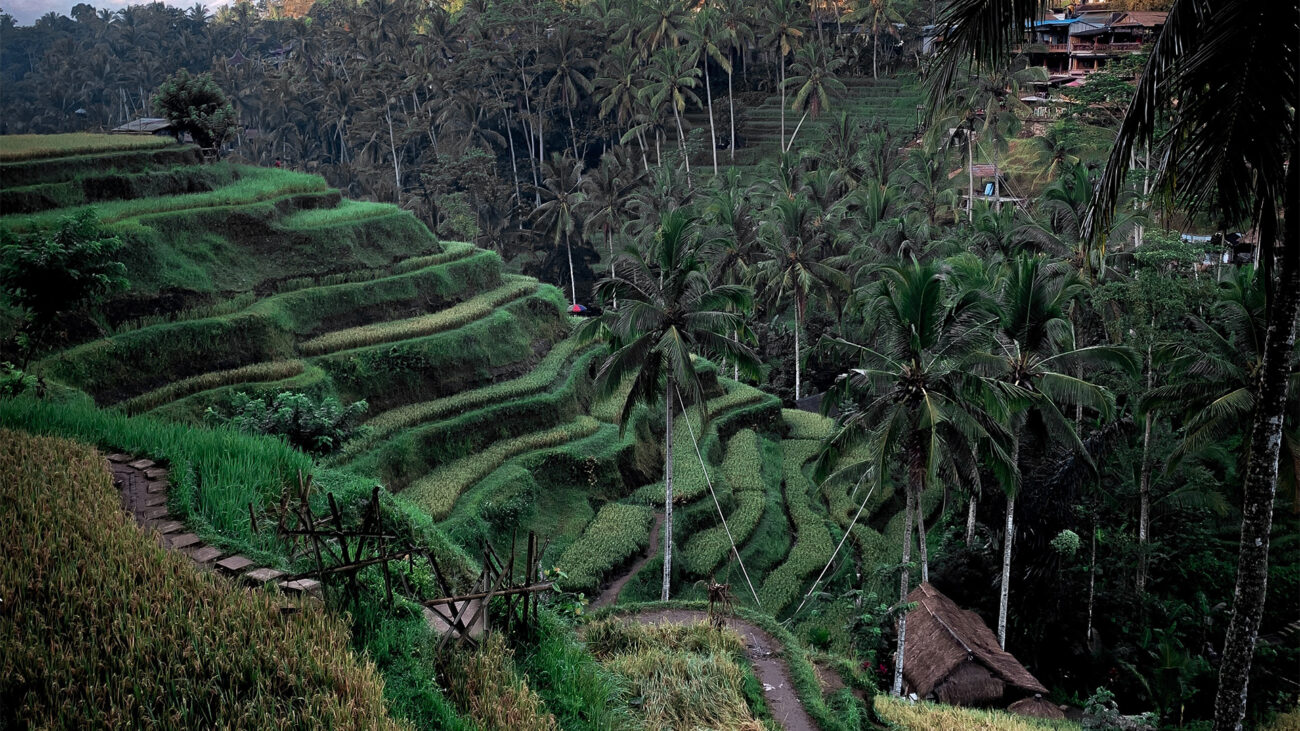
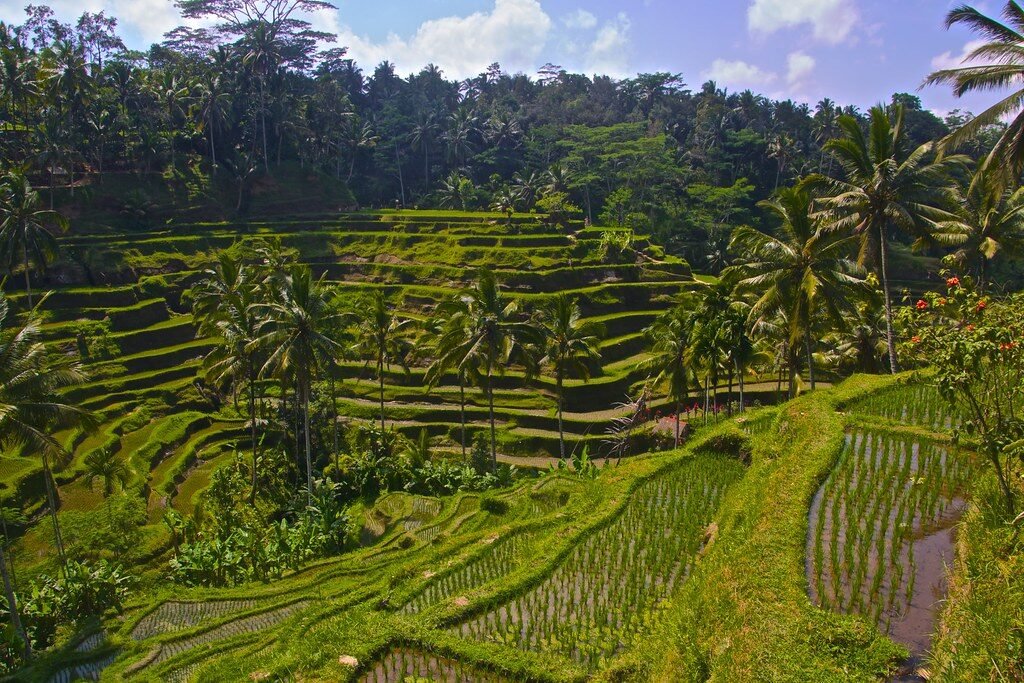
Tegallalang is the image everyone has in their head when they think of Bali: steep green steps of rice carved into both sides of a narrow valley, with coconut palms rising out of the paddies. It is also, from about 10:00 until mid-afternoon, one of the most crowded places on the island. Arriving between 7:30 and 8:00 is the single best decision you can make on this itinerary.
What most visitors do not realise is that these terraces are working farms, irrigated by subak — the cooperative water-sharing system that Balinese farmers have managed for around a thousand years and which UNESCO recognised as part of Bali’s Cultural Landscape in 2012. The water that fills these paddies has usually passed through a temple before it arrives.
What it costs in 2026
- Entrance: around IDR 15,000–25,000 per person, depending on which gate you use — cash only.
- Farmer donations: once you walk down into the valley, individual families ask IDR 10,000–20,000 to cross their paths or bridges. This is normal and fair — they maintain the paths.
- Swings and photo nests: optional and priced separately, often several hundred thousand rupiah. They are not part of the terrace experience itself.
Tip: Bring small notes. You will pay several small amounts, and nobody on the path will have change for a IDR 100,000 note. Our cash or card in Bali guide explains exactly how much cash to carry.
Time needed: 1 to 1.5 hours if you walk down into the valley and back up. The climb back is steep — take water.
09:30 — Tirta Empul Holy Water Temple
From Tegallalang, your driver continues north-east for about 20–30 minutes to Pura Tirta Empul in Tampaksiring, a temple built in the 10th century around a natural spring that the Balinese consider sacred. It is not a monument — it is an active temple, and on most mornings you will see Balinese families here doing exactly what their grandparents did.
The heart of the temple is a long rectangular pool fed by a row of stone spouts. Worshippers wade in and bow their heads under each spout in turn, a purification ritual called melukat. Visitors are welcome to join, but it is a religious act, not a water attraction.
What it costs in 2026
- Entrance: IDR 75,000 for adults and IDR 50,000 for children aged 5–12 (under-5s free). A sarong and sash to wear around the grounds are provided.
- Bathing sarong: if you want to enter the water, a separate bathing sarong is rented on site.
- Hours: generally 08:00–18:00 daily, though ceremonies can close individual areas.
If you want to join the purification
- Go in the order the temple staff or your guide shows you — start at the left and move along.
- Two spouts are skipped by visitors, because they are used for rites connected with death. Ask if you are unsure.
- Do not swim, splash or pose for long photo sessions in the pool.
- Women who are menstruating traditionally do not enter Balinese temples.
For the full list of do’s and don’ts inside any Balinese temple, read our Bali temple etiquette guide before you go.
Time needed: 30–45 minutes to walk the grounds, 1–1.5 hours if you take part in melukat. Bring a change of clothes and a small towel if you plan to go in.
11:30 — Lunch Back in Ubud
Head back towards central Ubud for lunch. This is the moment to leave the tourist cafés for another day and eat at a warung — a small, family-run local eatery. Late morning is when warung food is freshest; many cook once, early, and serve until the dishes run out.
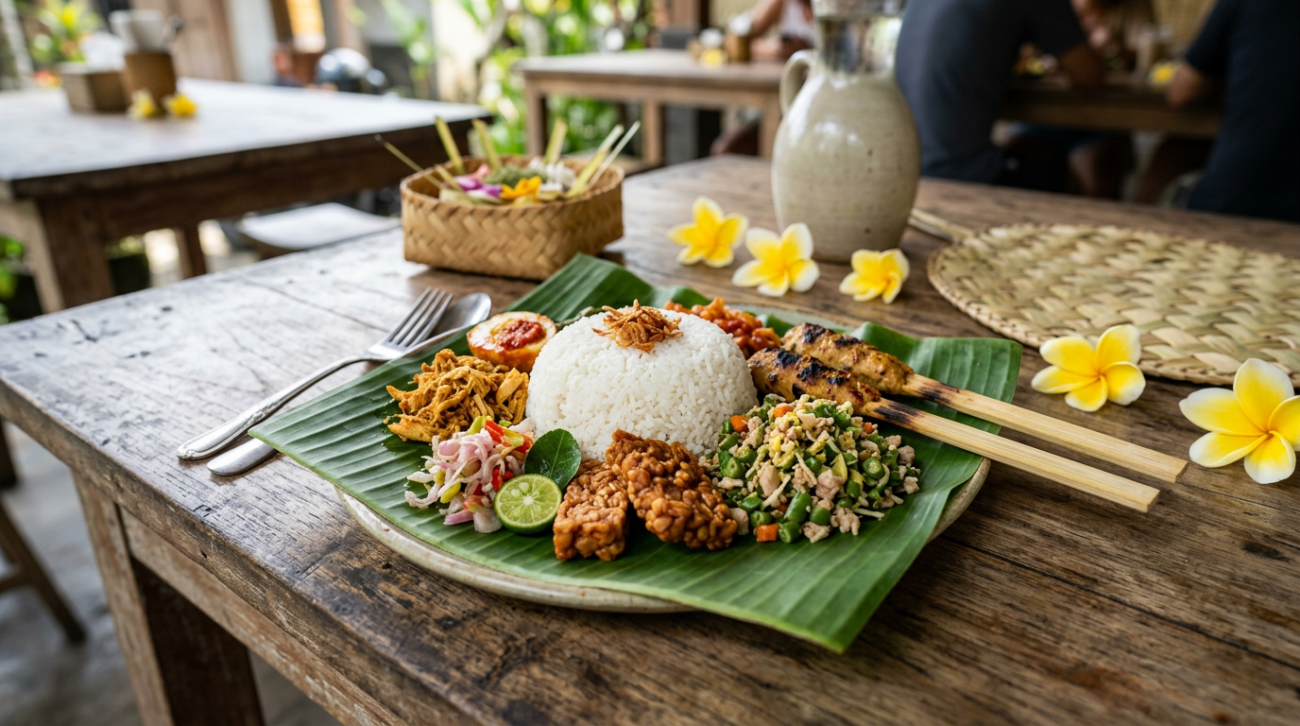
Ubud is especially famous for babi guling (spit-roasted suckling pig), but there is plenty for everyone: nasi campur (rice with a spread of small dishes), sate lilit (minced fish satay wrapped on lemongrass), and excellent vegetarian options thanks to Ubud’s long-standing wellness scene. A good warung lunch costs around IDR 30,000–80,000 per person.
If you are not sure what to order or what a fair price looks like, our complete guide to Balinese cuisine explains every dish, how to spot a good warung, and the phrases to use when ordering.
This is also a good time to let your driver go. The rest of the day is on foot.
13:00 — Ubud Palace and Pura Taman Saraswati
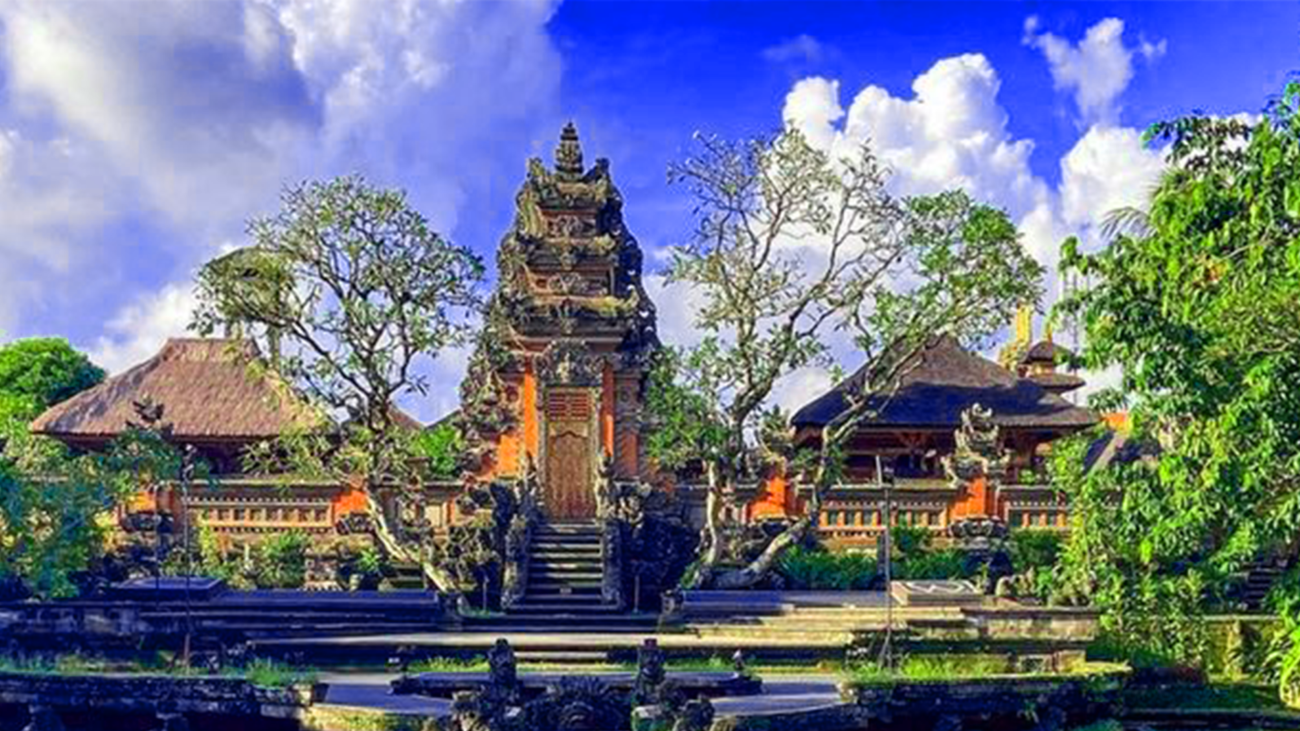
Ubud Palace (Puri Saren Agung) sits at the main crossroads of town, opposite the market. It was the residence of Ubud’s royal family, and members of the family still live in the private sections today. The outer courtyards, with their carved stone gates and gilded doors, are free to enter during the day. Walk in quietly, take a few photos, and notice the stage in the front courtyard — you will be back here tonight.
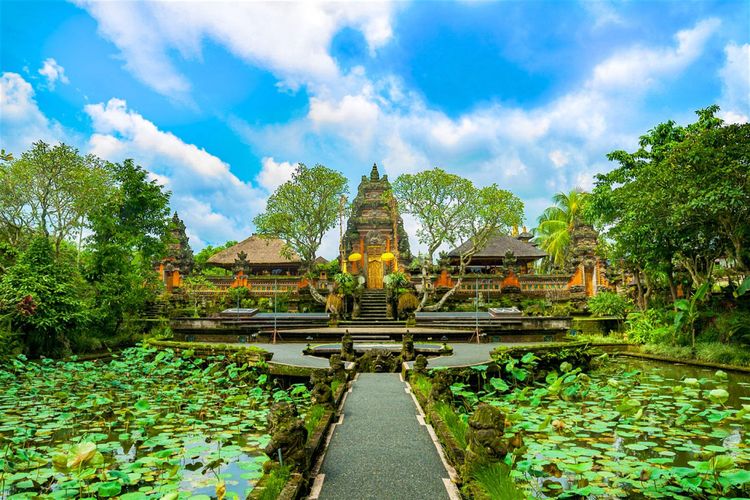
A three-minute walk west along Jalan Raya Ubud brings you to Pura Taman Saraswati, a temple dedicated to Dewi Saraswati, the Hindu goddess of learning and the arts — a fitting patron for a town built on painting, carving and dance. The path to the temple runs between two ponds full of lotus flowers. It is free to look from the outer area, and remarkably calm given it sits on the busiest street in town.
As you walk, look down: the small palm-leaf trays placed on steps, shrines and even pavements are canang sari, the daily offerings every Balinese household makes. Try not to step on them. Our canang sari guide explains what each flower colour means.
14:00 — Ubud Art Market
Directly across the road from the palace is the Ubud Art Market (Pasar Seni Ubud) — two levels of stalls selling sarongs, woven bags, wood carvings, paintings, silver, kites and wind chimes. Early in the morning the lower market sells fresh produce to locals; by afternoon it has turned fully to crafts.
It is fun, it is chaotic, and it is also where many visitors overpay for items that were not made in Bali at all. A few honest tips:
- Bargaining is expected. Start at around a third to half of the first price and settle somewhere in the middle — with a smile.
- Many identical items mean mass production. If the same “hand-carved” mask appears on twenty stalls, it came from a factory, often outside Bali.
- Handle before you buy. For bamboo wind chimes especially, tap each tube — a well-made chime has tubes cut and tuned to ring cleanly together, while cheap ones sound flat or rattle. Check the bamboo for cracks and the knots for firm, even stringing.
For more about how prices and tactics work in tourist areas, see our Bali tourist scams guide.
From our own workshop
Baliamerta’s bamboo wind chimes are made by hand in Kayubihi village, Bangli — about an hour from Ubud — by a family that has been cutting and tuning bamboo since 1998. Every chime is sound-tested before it leaves the workshop, and we ship worldwide, so there is no need to squeeze one into your suitcase. Browse our handmade bamboo wind chimes.
15:30 — Sacred Monkey Forest Sanctuary
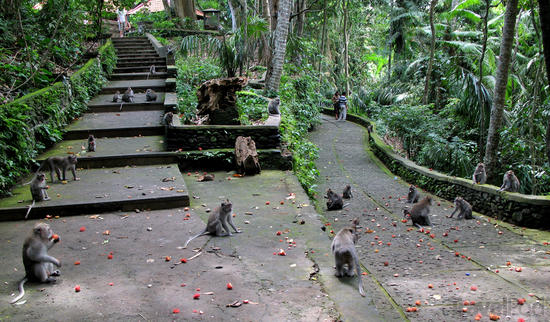
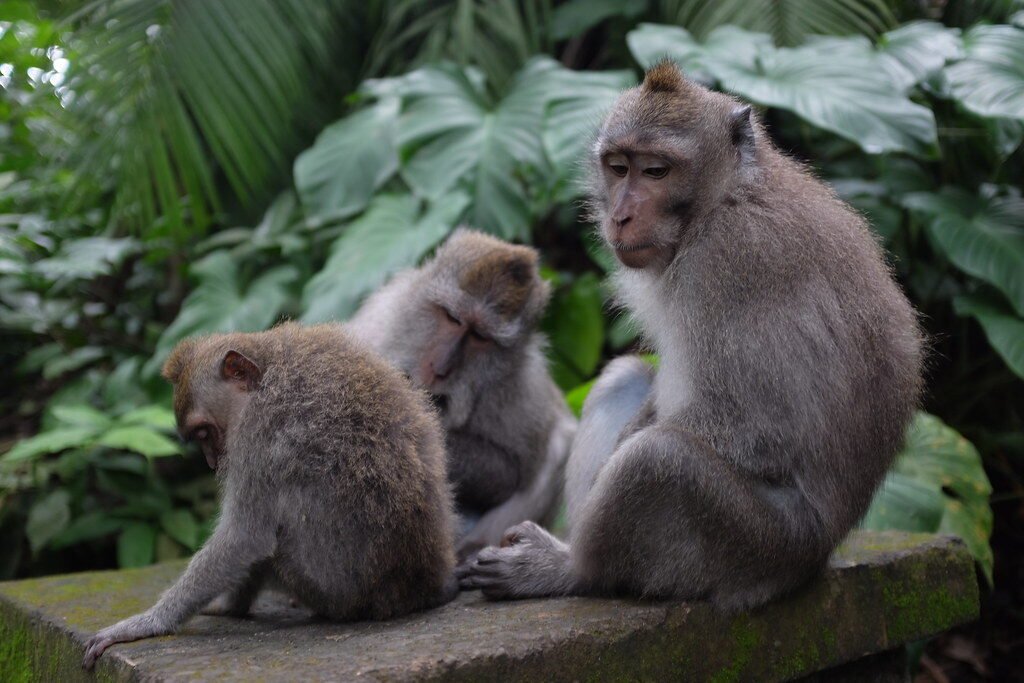
Walk south down Jalan Monkey Forest (about 15–20 minutes from the palace, all downhill) to the Sacred Monkey Forest Sanctuary. It is run by the village of Padangtegal and is home to more than a thousand long-tailed macaques, living among moss-covered temples, giant banyan trees and a river gorge crossed by stone bridges.
The forest is organised around the Balinese philosophy of Tri Hita Karana — harmony between people, nature and the spiritual world — and it contains three temples, including Pura Dalem Agung Padangtegal. Visitors can admire them from outside, but the inner courtyards are reserved for worship.
What it costs in 2026
- Entrance: the sanctuary currently lists around IDR 130,000 for adults and IDR 100,000 for children. Prices here change more often than anywhere else on this list, so check at the counter.
- Hours: 09:00–18:00, with last entry at 17:00. This is why the Monkey Forest comes at 15:30 in this itinerary, not later.
Monkey rules that actually matter
- No food, no drinks, no plastic bags. The monkeys know exactly what a crinkling bag sounds like.
- Secure everything: sunglasses, hats, earrings and phones are the most commonly stolen items. Zip them into a bag.
- Do not touch, feed or stare. Prolonged eye contact is read as a challenge.
- If a monkey climbs on you, stay calm and still — it will usually jump off on its own. Staff are always nearby.
Time needed: 1.5 hours is ideal.
17:30 — Dinner
Walk back up towards the centre and have an early dinner. Eating around 17:30 means you finish in time to get a good seat at the dance — and Ubud’s popular restaurants are far easier to get into before 18:30. The streets around Jalan Goutama and Jalan Dewi Sita, between the palace and the Monkey Forest, are full of small restaurants in every price range.
19:30 — Legong Dance at Ubud Palace
End your day where you walked through this afternoon. Every evening, the palace courtyard is lit with lanterns and a full gamelan orchestra — bronze gongs, metallophones and drums — accompanies a traditional dance performance. The most famous is the Legong, a refined classical court dance once performed only for royalty, known for its fast, precise finger movements and expressive eyes.
- Tickets: about IDR 100,000 per person, sold at the entrance and by ticket sellers along Jalan Raya Ubud during the late afternoon.
- Time: starts at 19:30 and lasts around 90 minutes.
- Seating is not assigned. Arrive 30–45 minutes early for a seat near the front — latecomers often stand at the back.
- The programme changes by night of the week. Your ticket usually includes a short synopsis of the story — read it before the show starts.
Watching Balinese dance by lantern light in a royal courtyard, a few steps from where you started your afternoon, is the perfect ending to a day in Ubud.
What One Day in Ubud Costs (2026)
| Item | Price per person (IDR) |
|---|---|
| Campuhan Ridge Walk | Free |
| Tegallalang entrance + farmer donations | 35,000 – 45,000 |
| Tirta Empul entrance (adult) | 75,000 |
| Warung lunch | 30,000 – 80,000 |
| Ubud Palace (daytime) & Pura Taman Saraswati | Free |
| Sacred Monkey Forest (adult) | around 130,000 |
| Dinner (mid-range) | 100,000 – 250,000 |
| Legong dance ticket | 100,000 |
| Total per person | about 470,000 – 680,000 |
| Private driver (per car, shared) | about 600,000 – 800,000 full day |
Shopping and optional extras such as swings or a bathing sarong at Tirta Empul are not included. Entrance fees in Bali change often, so treat these as a guide and carry some extra cash.
What to Wear and Pack
- Shoulders and knees covered for temples. Tirta Empul provides a sarong, but a light scarf is useful everywhere else.
- Shoes with grip for the rice terrace paths, which can be muddy even in the dry season.
- Small cash — lots of IDR 10,000, 20,000 and 50,000 notes.
- Water, sunscreen and a hat (but keep the hat in your bag at the Monkey Forest).
- A zip-up bag for the Monkey Forest.
- Swimwear and a change of clothes if you plan to do melukat at Tirta Empul.
5 Mistakes That Ruin a Day in Ubud
- Starting at 10:00. By then Tegallalang is full, Tirta Empul is full, and you will sit in traffic between them. Start early or skip the morning half.
- Adding waterfalls. Tegenungan, Tibumana and Tukad Cepung are beautiful, but each one adds 1.5–2 hours with travel. Save them for a second day.
- Leaving the Monkey Forest until 17:00. Last entry is 17:00 — arrive at 16:55 and you will have no time inside.
- Only carrying large notes. Farmer donations, parking and market stalls all need small change.
- Treating temples as photo sets. Tirta Empul and Pura Taman Saraswati are active places of worship. Dress properly, stay quiet and never stand higher than a priest or offering.
Have More Than One Day?
If you can stay longer, Ubud is the perfect base for exploring central and east Bali. With a second day you could add a waterfall and the rock-cut shrines of Gunung Kawi, a Balinese cooking class, or a sunrise trek up Mount Batur. You could also drive north-east into Bangli, one of Bali’s quietest regencies, where traditional villages like Penglipuran and our own home village, Kayubihi, still live much as they always have — surrounded by bamboo forest.
For ideas that will not cost you a rupiah, see our list of free destinations in Ubud.
Frequently Asked Questions
Is one day enough for Ubud?
One day is enough to see Ubud’s highlights — the rice terraces, a water temple, the Monkey Forest, the palace and a traditional dance — as long as you start early and do not try to add too many extra stops. To enjoy the spas, yoga, walks and villages around town, plan for three days or more.
What is the best order to visit Ubud’s attractions in one day?
Visit the attractions outside town first — Tegallalang Rice Terrace in the early morning, then Tirta Empul — before the tour buses arrive. Spend the afternoon on foot in central Ubud: the palace, Pura Taman Saraswati, the art market and the Monkey Forest, which has its last entry at 17:00. Finish with the evening dance at Ubud Palace.
Do I need a driver for a one day Ubud itinerary?
For the morning, yes — Tegallalang and Tirta Empul are outside town and there is no convenient public transport. A private driver usually costs around IDR 600,000–800,000 for a full day. The afternoon in central Ubud is easily done on foot.
How much does a day in Ubud cost?
Entrance fees, meals and a dance ticket come to roughly IDR 470,000–680,000 per person in 2026, plus the cost of a driver, which you can split between your group.
What should I wear to Ubud’s temples?
Cover your shoulders and knees. A sarong and sash are required inside Balinese temples; Tirta Empul provides them with your ticket, and at other temples they can usually be borrowed or rented at the entrance.
Is the Ubud Monkey Forest safe?
Yes, as long as you follow the rules: bring no food or plastic bags, secure your belongings, and do not touch, feed or stare at the monkeys. Staff are stationed throughout the forest to help.
A Last Word
Ubud rewards people who slow down. The best moments of this day will probably not be on any list — a farmer walking the edge of a paddy at 7:30, the smell of incense at Tirta Empul, a woman placing canang sari on a step in front of the market, the first note of the gamelan as the lights come up in the palace courtyard. Plan the day well, then leave room for those moments.
And if a piece of Ubud’s sound comes home with you, make it a real one. Discover handmade Balinese crafts from Baliamerta.