Blog
Balinese Traditional Dance: Kecak, Legong & Barong (2026)

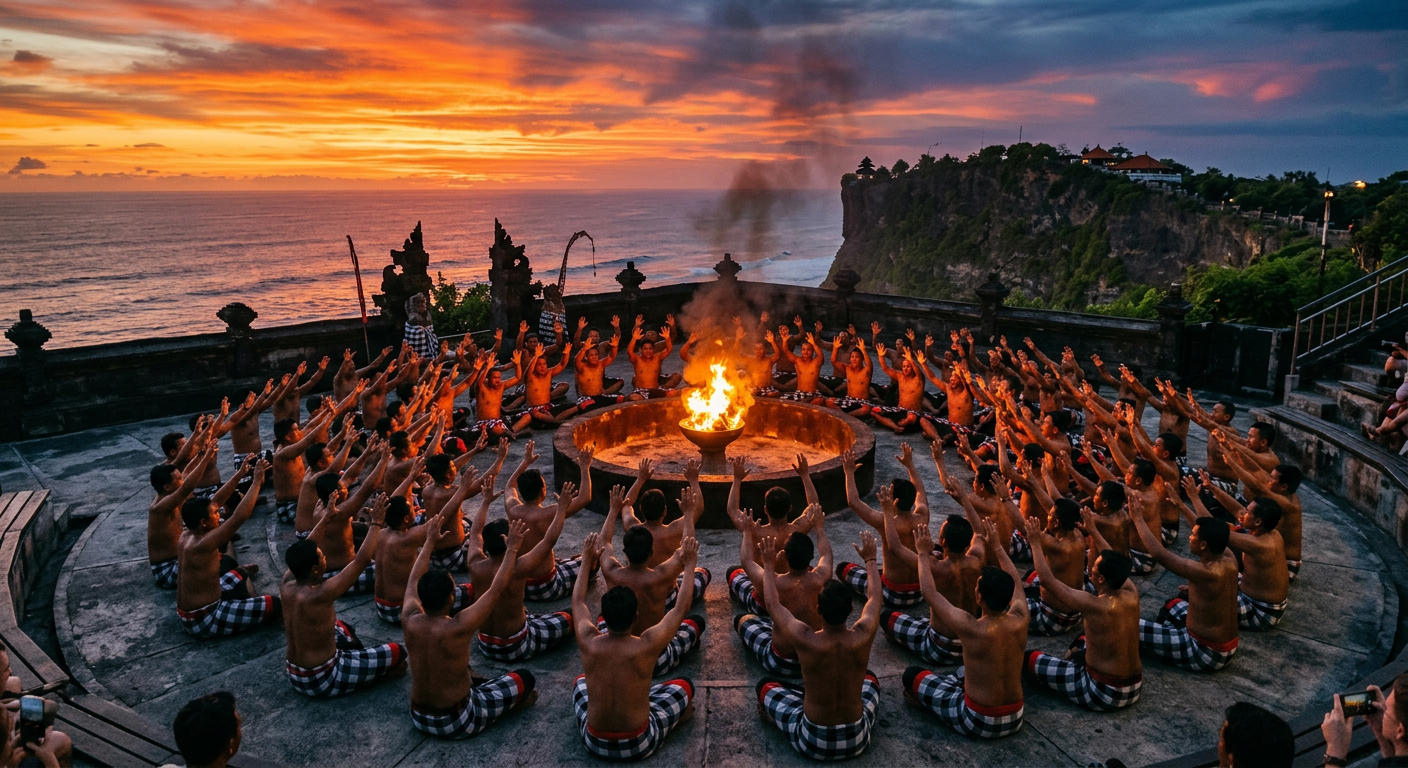
There is a moment during the Kecak dance at Uluwatu when the sun drops below the Indian Ocean horizon and the cliff turns gold, and fifty men are chanting in unison, and fire appears on stage, and something in your chest that you cannot quite name responds to it. It does not matter that you do not know the story of Rama and Sita. The sound alone carries you.
This is what Balinese traditional dance does. It does not require you to understand it to feel it. But understanding it makes it infinitely richer — and that is what this guide is for.
Bali has dozens of traditional dances, each tied to a specific ceremony, season, or spiritual purpose. For visitors, three performances dominate every itinerary: Kecak, Legong, and Barong. Each is completely different in mood, meaning, and setting. Each is worth seeing. This guide tells you what each one is, where to see it, what it costs in 2026, and — most importantly — what is actually happening on stage.
Why Balinese Traditional Dance is Unlike Any Performance You’ve Seen
In most of the world, dance is entertainment. In Bali, it began as something else entirely.
Traditional Balinese dance is rooted in Hinduism and has been inseparable from ceremony and temple worship for centuries. Every gesture has meaning. The angle of a finger, the direction of a gaze, the tilt of a head — these are not stylistic choices. They are a language. The raised index finger means one thing. The curved hand with splayed fingers means another. Dancers train for years — often beginning as young children — to make this vocabulary feel effortless.
In 2015, UNESCO inscribed nine forms of Balinese traditional dance on its Intangible Cultural Heritage list, recognising them as living expressions of culture that must be protected and transmitted to future generations. The dances you will see in Bali are not reconstructions or museum pieces. They are living traditions, performed the same way they have been performed for centuries, by communities that consider them sacred.
The performances staged for tourists at Uluwatu, Ubud Palace, and Batubulan are specifically designed as cultural presentations for visitors — they are less sacred than genuine temple ceremonies but equally skilled. Think of them as an open invitation into a world that Bali is genuinely proud to share.
Kecak: The Dance of Fire and the Monkey Army
What it is
Kecak — pronounced “ke-chak” — is the most dramatically accessible of all Balinese traditional dances, and the one that most visitors remember longest. It features a chorus of 50 to 100 bare-chested men seated in concentric circles, chanting “cak-cak-cak” in overlapping rhythmic patterns, creating a hypnotic soundscape. Unlike most traditional Balinese dances, Kecak does not rely on gamelan instruments — the chanting is the entire orchestra.
The dance retells an episode from the Ramayana — the ancient Hindu epic that tells the story of Prince Rama, his wife Sita, and his quest to rescue her from the demon king Ravana. The chanting circle represents the army of monkeys led by Hanuman, the white monkey god who helps Rama in his battle. As the story unfolds, costumed performers move through the circle — Rama, Sita, Ravana, Hanuman — enacting the myth in precise, stylised movement against the backdrop of the chant.
The performance ends with fire. A performer in a coconut-leaf costume — representing the monkey army — walks through scattered burning coconut husks while the chanting reaches its peak. It is genuinely spectacular, and the cliff setting at Uluwatu makes it one of the most visually dramatic cultural experiences in all of Southeast Asia.
The story behind the chant
Kecak was developed in the 1930s in collaboration between Balinese performers and the German artist Walter Spies. It was derived from the Sanghyang ritual — a sacred trance ceremony — but stripped of its most sacred elements to create something that could be shared with visitors. The chant itself comes from that original ceremony. When you hear it, you are hearing something genuinely ancient dressed in a form that Bali chose to offer the world.
Where to watch Kecak in 2026
Pura Luhur Uluwatu (Best setting — Highly Recommended)
The cliffside amphitheatre at Uluwatu Temple is the iconic venue. The performance has evolved into a world-class production that combines rhythmic chanting, dramatic fire play, and Bali’s most legendary sunset backdrop. The amphitheatre reaches its 1,400-seat capacity well before the sun begins to set.
| Detail | Information |
|---|---|
| Show times | 18:00–19:00 and 19:00–20:00 WITA (daily) |
| Kecak ticket (adult) | Rp150,000 on-site / from Rp137,000–140,000 online |
| Kecak ticket (child 2–9) | Rp75,000 |
| Temple entrance (separate) | Charged separately at the gate |
| Duration | Approximately 60 minutes |
| Book online via | Klook, Tiket.com, or Traveloka (8–10% cheaper) |
| Best session | 18:00 for sunset atmosphere — arrive by 4:30pm |
Ubud — Pura Taman Saraswati and other venues
Kecak is also performed at several venues in and around Ubud on rotating schedules. The setting is less dramatic than Uluwatu but more intimate. Check current schedules at your accommodation.
Practical tips for Kecak at Uluwatu
- Book tickets in advance — the 18:00 sunset session regularly sells out during peak season (July–August). Book 1–2 days ahead via Klook or Traveloka.
- Arrive early — getting there by 4:30pm gives you time to explore the temple and secure a good seat. The front rows are not reserved; it’s first-come.
- Watch your belongings — the monkeys at Uluwatu are notorious thieves. Secure your sunglasses, phone, and hat before entering the temple grounds.
- Wear a sarong — Uluwatu is an active temple. A sarong and sash are required to enter. Rentals are available at the gate for Rp10,000–Rp20,000, or bring your own.
- Choose the 18:00 session if you want the sunset. Choose the 19:00 session if you prefer the dramatic fire effect after dark — both are valid choices depending on what you value.
Legong: The Dance of Refinement and Royal Beauty
What it is
Where Kecak is fire and power, Legong is precision and grace. Legong is a classical dance form performed by young female dancers in elaborate golden costumes. This stylised dance requires years of training to master its intricate choreography and facial expressions.
What makes Legong extraordinary is the detail. Every part of the body communicates something — the hands move through dozens of gestures called mudra, each with a specific meaning. The eyes shift in carefully choreographed patterns. Even the direction a dancer faces carries symbolic weight. A full Legong performance lasts 30–45 minutes and tells a story from Hindu epic literature, often the Ramayana. The accompanying gamelan music is hypnotic.
Legong is considered the most refined and demanding of all Balinese dances. Traditionally performed only by young girls who begin training between the ages of five and seven, it takes years of daily practice to master the vocabulary of movement well enough to perform publicly. When you watch a Legong dancer, you are watching the result of a childhood spent learning a physical language.
The story Legong tells
The most commonly performed Legong is Legong Lasem, which tells the story of a king who captures a princess. The narrative involves a bird of ill omen — the curlew — and ends in the king’s death in battle. Like most Balinese dance stories, it is drawn from ancient Indian and Javanese literature filtered through centuries of Balinese interpretation. You do not need to know the story in advance; most performances provide a brief programme note. But knowing what you are looking at — the precise language of the hands, the meaning of each turn — transforms watching into understanding.
Where to watch Legong in 2026
Puri Saren Agung (Ubud Royal Palace) — Best Venue
In central Ubud, Ubud Palace offers rotating performances of Legong and other traditional Balinese dance styles. Shows begin around 7:30pm, and tickets can be purchased at the entrance. The setting feels intimate yet historically grounded.
| Detail | Information |
|---|---|
| Location | Puri Saren Agung, Jl. Raya Ubud, central Ubud |
| Show time | Several evenings per week, 7:30pm |
| Ticket price | Rp100,000 per person |
| Duration | Approximately 45–60 minutes |
| Schedule varies | Legong alternates with other dances — confirm locally |
Pura Taman Saraswati, Ubud
The lotus pond temple in central Ubud also hosts evening Legong performances. The temple backdrop and floating stage create a beautiful, intimate atmosphere. Check current schedules at the venue directly.
ARMA (Agung Rai Museum of Art), Ubud
ARMA hosts regular cultural performances including Legong in a well-maintained open-air setting with good sightlines. Tickets available at the door or via the ARMA website.
Practical tips for Legong
- Sit close — the details of Legong are what make it extraordinary. The further away you sit, the more you miss. Arrive early to get a front or second-row seat.
- Read the programme note — most venues provide a brief story summary. Reading it before the performance helps you follow the narrative.
- Watch the hands and eyes — this is where the real performance lives. The dramatic storytelling of Kecak is easy to follow; Legong rewards those who pay closer attention.
- Confirm the schedule before going — Legong often alternates with other dances at the same venue. Your hotel can confirm what is playing on your specific evening.
Barong: The Eternal Battle Between Good and Evil
What it is
Barong is the most spiritually layered of the three major Balinese performances — a masked drama that depicts the eternal battle between good and evil, embodied by two mythical creatures: Barong, the lion-like protector spirit, and Rangda, the terrifying widow-witch.
Barong represents the eternal struggle between good and evil. The dance is part performance, part exorcism, and traditionally performed at temple festivals to maintain spiritual balance in the village. In its ceremonial context, the Barong dance is genuinely sacred — believed to invoke real protective spirits. The version performed for visitors at Batubulan is a dedicated tourist presentation, but it draws on the same stories and uses the same costumes as the ceremonial version.
The Barong costume is operated by two dancers — one controls the head, one the back legs. The mask is considered sacred and blessed by a priest before use. The Rangda mask, with its wild eyes, fangs, and long fingernails, is among the most visually arresting objects in Balinese art. Even outside a performance, these masks carry spiritual weight in the communities that own them.
The story Barong tells
The performance is based on the Calon Arang — a 12th-century Javanese-Balinese manuscript about a widow-witch who causes plague and chaos in the kingdom. Barong and his followers battle Rangda’s forces. At the climax, Rangda casts a spell that causes Barong’s followers to turn their kris (sacred daggers) on themselves — but Barong’s magic makes them invincible. The battle ends in balance rather than victory, because in Balinese cosmology, good and evil are not opposites to be defeated — they are forces to be maintained in equilibrium.
This is perhaps the most philosophically interesting of the three dances. It does not end with good triumphant. It ends with balance restored — which is the actual Balinese worldview.
Where to watch Barong in 2026
Batubulan Village, Gianyar — The Main Venue
Batubulan village hosts Barong performances daily: 9:30–10:30am, ticket around Rp100,000 per person. Arrive by 9:00am for a good seat.
| Detail | Information |
|---|---|
| Location | Batubulan Village, near Gianyar (50 min from Nusa Dua) |
| Show time | Daily 9:30–10:30am |
| Ticket price | Rp100,000 per person |
| Duration | 60 minutes |
| Arrive by | 9:00am for good seating |
| Combine with | Ubud day trip — Batubulan is en route |
Practical tips for Barong
- Combine with an Ubud day trip — Batubulan is directly between South Bali and Ubud. A morning Barong performance followed by a full Ubud day makes perfect logistical sense.
- Watch the masks — the Barong and Rangda masks are extraordinary works of art in their own right. The craftsmanship and spiritual symbolism embedded in each mask is worth studying during the performance.
- Note the ending — when the followers turn their kris on themselves and are unharmed, you are watching the climax of the entire narrative. This is the moment that carries the most spiritual weight.
- Morning energy is different — unlike the evening magic of Kecak at Uluwatu, Barong is a morning performance in full daylight. The open-air stage and daytime setting give it a different, more communal feel.
Kecak vs Legong vs Barong: Which Should You See?
| Dance | Best For | Time | Price | Wow Factor |
|---|---|---|---|---|
| Kecak | First-timers, drama lovers, sunset seekers | Evening | Rp150,000 | ⭐⭐⭐⭐⭐ |
| Legong | Culture lovers, detail seekers, repeat visitors | Evening | Rp100,000 | ⭐⭐⭐⭐ |
| Barong | Story lovers, mythology enthusiasts, families | Morning | Rp100,000 | ⭐⭐⭐⭐ |
If you can only see one: Kecak at Uluwatu. The combination of setting, sound, fire, and sunset makes it the single most memorable cultural experience Bali offers to visitors.
If you have two evenings: Kecak at Uluwatu on the first, Legong at Ubud Palace on the second. Two completely different moods, two completely different aspects of Balinese culture.
If you have a full day and want to see all three: Morning Barong at Batubulan (9:30am), Ubud day trip midday, Kecak at Uluwatu at sunset. It is a long day but an extraordinary one.
Other Balinese Traditional Dances Worth Knowing
Beyond the three main tourist performances, Bali has a rich spectrum of traditional dance that visitors occasionally encounter at ceremonies:
Pendet: A welcoming dance traditionally performed by women at temple ceremonies, offering flower petals as an expression of gratitude to the gods. Visitors sometimes see Pendet at hotel cultural evenings. It is one of the oldest Balinese dances still performed today.
Rejang: A sacred procession dance performed exclusively at temple ceremonies, often in long lines of women. Not performed for tourists — if you encounter it at a genuine ceremony, observe quietly from the outer areas.
Baris: A warrior dance performed by men, representing the pride and readiness of a Balinese soldier. Highly technical, requiring strong posture and precise eye movements that communicate strength and vigilance.
Topeng: A mask dance in which a solo performer plays multiple characters by changing masks throughout the performance. Topeng is one of the most complex forms — a single dancer must inhabit the physical and psychological qualities of each character through mask and movement alone.
Sanghyang: The sacred trance dance from which Kecak was derived. Performed only in genuine ceremonial contexts, Sanghyang is not staged for tourists and should never be treated as a performance to observe casually if encountered.
A Note on Authentic vs Tourist Performances
There is an ongoing conversation among thoughtful travellers about the authenticity of tourist-oriented dance performances in Bali. It is worth addressing directly.
The performances at Uluwatu, Ubud Palace, and Batubulan are not compromised by being designed for visitors. They are performed by the same trained dancers who perform in ceremonial contexts. The skills, costumes, stories, and musicianship are genuine. What differs is the spiritual intention — a performance staged for an audience of tourists is not the same as a sacred ceremony at a temple festival. Both are real. They are just different things.
The Balinese themselves have largely made peace with this distinction. Tourism has provided economic support for the continued training of dancers, the maintenance of costumes, and the employment of gamelan musicians. When you buy a Kecak ticket, you are not corrupting something sacred — you are supporting a tradition that the Balinese community has chosen to share with the world on its own terms.
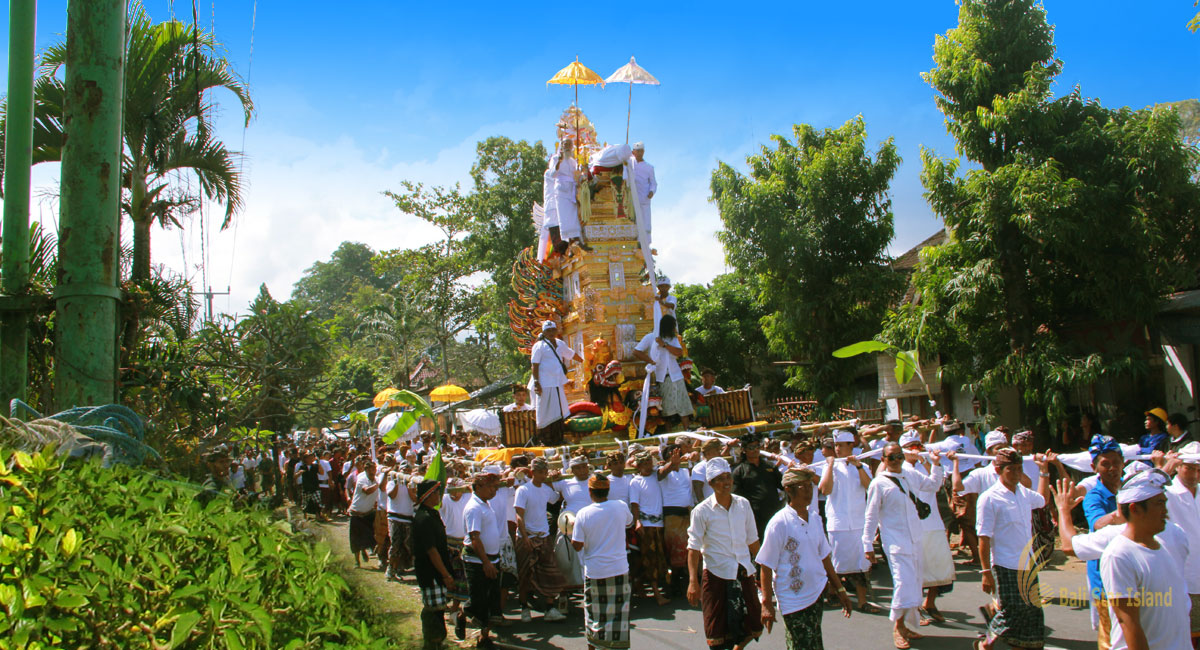
If you want the other kind of experience — the genuinely ceremonial one — read our guide to attending a Balinese cremation ceremony as a respectful visitor. That is where you will find Bali’s soul in its most unguarded form.
What to Wear and How to Behave
At any Balinese traditional dance performance held at a temple venue, the same dress rules apply as at all Balinese temples:
- Sarong and sash covering the waist and legs to mid-calf
- Covered shoulders — no sleeveless tops or tank tops
- Remove footwear at temple entrances
- Keep your phone on silent during the performance
- Photography is generally permitted during tourist performances — but keep flash off and never photograph during the most sacred moments
- Do not talk over the performance — the people sitting around you came to experience something meaningful
For a complete guide to temple dress and behaviour, read our Bali temple etiquette guide.
2026 Performance Quick Reference
| Performance | Venue | Time | Ticket | Frequency |
|---|---|---|---|---|
| Kecak Fire Dance | Uluwatu Temple | 18:00 & 19:00 | Rp150,000 | Daily |
| Kecak Dance | Various Ubud venues | Evening | Rp100,000 | Several/week |
| Legong Dance | Ubud Palace | 19:30 | Rp100,000 | Several/week |
| Legong Dance | Pura Taman Saraswati | Evening | Rp100,000 | Several/week |
| Barong Dance | Batubulan Village | 09:30 | Rp100,000 | Daily |
Note: All prices are 2026 estimates and subject to change. Confirm current schedules and prices with your accommodation or via Klook/Traveloka before visiting.
Final Thought: More Than Entertainment
When you watch Kecak, Legong, or Barong in Bali, you are watching something that has been practiced for longer than most countries have existed. These dances are how the Balinese community has transmitted its values, its stories, its cosmology, and its understanding of the world from one generation to the next.
The child who becomes a Legong dancer at age seven is not just learning a performance. She is learning a way of understanding beauty, discipline, and her place in a tradition larger than herself. The men who chant in the Kecak circle are not just performers. They are the latest in a long line of people who have held that circle together.
When you sit in the amphitheatre at Uluwatu and the sun goes down and the chanting begins, you are being welcomed into that circle as a witness. Arrive prepared, arrive present, and let Bali show you something it is genuinely proud of.
Before your performance, read our complete guide to Bali temple etiquette — including dress code, behaviour, and photography rules that apply at all temple venues. And if you want to go deeper into Balinese culture, our guide to attending a Ngaben cremation ceremony covers one of the most profound cultural experiences the island offers. Bring a piece of Bali home with our collection of authentic Balinese handmade crafts — made by the same communities that carry these traditions forward.
Have you seen a Balinese traditional dance performance in Bali? Which one moved you most — Kecak, Legong, or Barong? Share in the comments below.