
Blog
Complete Guide to Balinese Cuisine: Must-Try Dishes and Where to Find Them

Bali is talked about endlessly for its temples, its sunsets, its rice terraces, and its surf. Its food — one of the most distinctive, spice-forward, culturally layered regional cuisines in all of Indonesia — gets a fraction of the attention it deserves. That is a mistake this guide is here to fix.
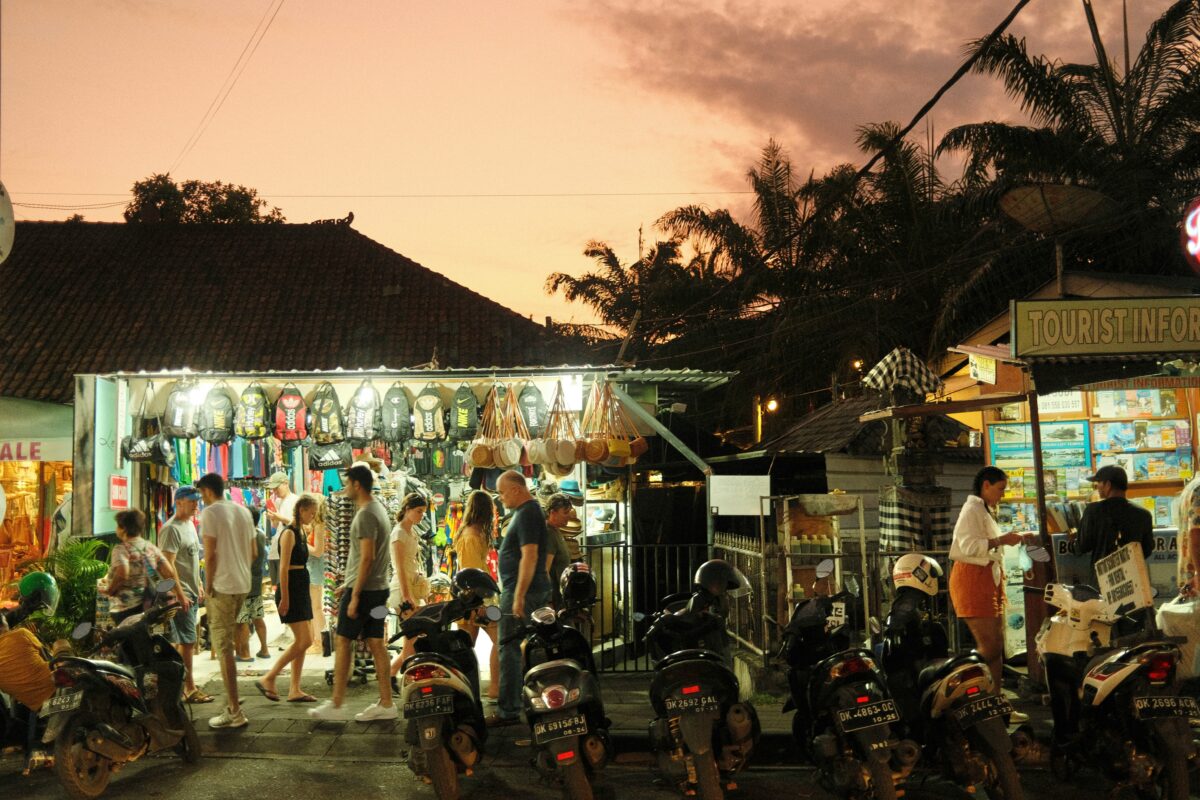
Balinese cuisine is inseparable from the island’s Hindu identity. The same dishes served at wedding ceremonies appear at roadside warungs at lunchtime. The spice paste that forms the foundation of almost every Balinese dish has been made the same way for generations. And the best meal you will eat in Bali will almost certainly not be in a hotel restaurant — it will be at a plastic table in a narrow alley, chosen by the smell drifting from the kitchen and the number of motorbikes parked outside.
This guide covers everything: the spice foundation that makes Balinese food taste the way it does, twelve dishes you must try, where to find the authentic versions by area, honest 2026 prices, vegetarian options, food etiquette, and a complete one-day eating itinerary. It is the guide I wish I had found before my first meal in Bali.
What Makes Balinese Cuisine Different from the Rest of Indonesia
Before the dish list, a few things that separate Balinese food from what most visitors expect and from what they will find anywhere else in the archipelago:
Pork is central. While Bali’s population is mainly Hindu, the rest of Indonesia’s archipelago is predominantly Muslim — this sees the replacement of beef with pork, which sets Bali completely apart from places like Java or Aceh. Babi Guling, Lawar with pork blood, Sate Lilit pork — these are dishes that simply do not exist on most Indonesian menus outside Bali. If you eat pork, Bali is paradise. If you do not, there are excellent alternatives — but know the landscape before you sit down.
Everything starts with the spice paste. Base genep, the island’s core spice mix, combines galangal, turmeric, garlic, shallot, lemongrass, candlenut, shrimp paste, and chilli — and it appears in everything from soups to roasts. This paste is why Balinese food tastes so immediately and unmistakably different from the same dishes made abroad. It is made fresh, pounded by hand, and fried in coconut oil before any other ingredient is added.
Food and ceremony are inseparable. Balinese cuisine is distinct from the rest of Indonesian cooking, shaped by Hindu traditions that include ceremonial dishes you will not find on Java or Sumatra. Babi Guling, Betutu, and Lawar were originally sacred offerings — prepared for gods before they were served to people. Understanding this explains why eating in Bali feels like it carries a weight that eating elsewhere does not.
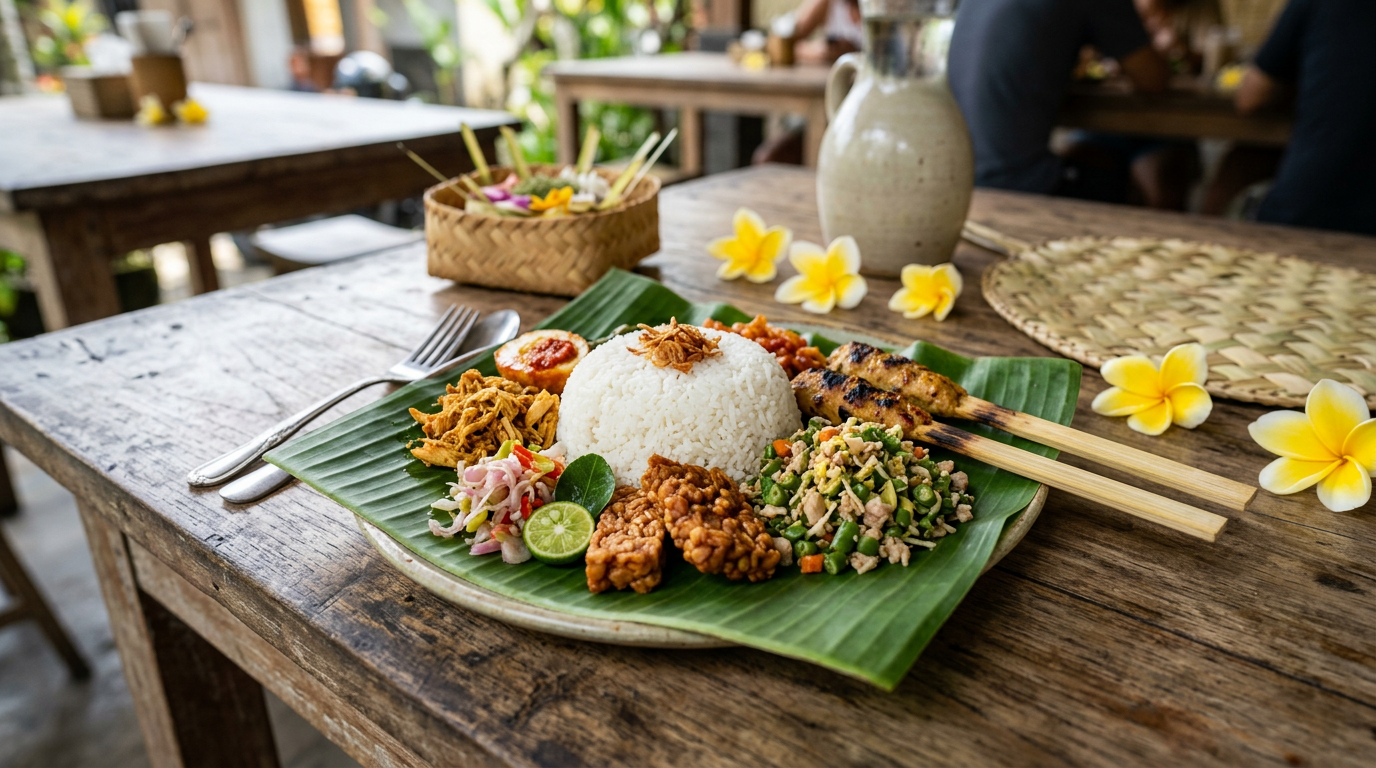
Rice is not a side dish — it is the meal. A typical Balinese meal involves four or five dishes arranged around a bowl of rice. The side dishes include a protein (pork, chicken, fish, tofu, or tempeh), egg, vegetables, and crunchy krupuk (rice crackers). Ordering only a main dish without rice in Bali is the equivalent of ordering only a sauce without pasta in Italy.
The Spice Foundation: Understanding Basa Genep
Basa genep is a complex traditional spice paste made from galangal, turmeric, lemongrass, shallots, garlic, ginger, chillies, and other local spices, meticulously ground into a fragrant blend. Traditional cooking methods elevate these spices further — Balinese cooks often roast or steam meats and fish wrapped in banana leaves, or grill them slowly over coconut and rice husks, creating tender textures and layered aromas that produce deep, complex flavours that stand out from many other Indonesian regional cuisines.
Knowing that basa genep exists explains a question that confuses almost every first-time visitor to Bali: why does the food you ate at the warung on the corner taste so much better than the “Balinese” restaurant at home? The paste is made fresh that morning from locally grown turmeric, galangal, and lemongrass. Nothing is pre-mixed. Nothing is dried. The flavour has nowhere to hide.
12 Dishes You Must Try: The Complete Balinese Cuisine List
1. Babi Guling — Spit-Roasted Suckling Pig
The king of Balinese food. Whole suckling pig roasted over fire, basted constantly, skin blistered and crisp, meat soft and soaked in spice. Served with rice, crackling, lawar, and sambal. This is Bali on a plate, and nothing else comes close.
A whole young pig is stuffed with basa genep, turmeric, lemongrass, and aromatic leaves, then skewered and rotated slowly over a wood or coconut husk fire for several hours. The result is golden, crackling skin over deeply spiced, tender pork. A full plate includes white rice, lawar (spiced minced meat with coconut), sate lilit, pork broth soup, and crispy pork skin — all for under Rp80,000 at the best warungs.
The crackling test: A good Babi Guling has crackling that shatters when you bite it. If it is chewy or soft, the pig was not roasted long enough or at the right temperature. Move on.
Best places 2026:
- Warung Babi Guling Ibu Oka — Ubud (Jl. Suweta No.1): Operating over 40 years, the most famous Babi Guling in Bali. Prices from Rp30,000–Rp80,000. Open daily 11am–7pm. Arrive early — they sell out.
- Warung Babi Guling Pak Malen — Seminyak (Jl. Sunset Road): The south Bali alternative. Spicing leans savoury and herbal. Rp30,000–Rp70,000. Open 8:30am–6:30pm daily. Cash only.
- Warung Babi Guling Swari — Canggu (Jl. Pantai Pererenan No.79): Celebrated for perfectly crisp skin and relaxed local atmosphere. Rp35,000–Rp70,000.
- Gianyar Night Market: The most authentic setting — Babi Guling served the way Balinese families eat it, chopped to order at an outdoor stall. Rp25,000–Rp40,000.
Price range: Rp25,000–Rp80,000 per portion (2026)
2. Bebek / Ayam Betutu — Slow-Cooked Duck or Chicken
Ayam Betutu consists of a whole chicken stuffed and seasoned with a special Balinese spice paste mixture, then wrapped in banana leaves and banana tree bark before being baked for 6–7 hours. Sometimes it is cooked in the coal fire itself. After cooking, the chicken meat is so juicy and tender that it separates effortlessly from the bone, with a delightfully aromatic flavour unlike anything you have experienced before.
The duck version — Bebek Betutu — is richer and more complex. The duck is thoroughly coated in spice paste, wrapped tightly in layers of banana leaves, then roasted or steamed for many hours — often up to 12 hours in the traditional version.
Betutu requires ordering in advance at better warungs — it cannot be rushed. If a restaurant serves it without notice, the cooking time was almost certainly shortened.
Best places 2026:
- Warung Men Tempeh — Gianyar: Order in the morning for afternoon pickup. One of the most respected Betutu warungs among local Balinese cooks.
- Bebek Goreng H. Slamet — Legian: One of the old joglo-style buildings with easy access from Sunset Road. Famous for a special blend that renders the duck fat, leaving the finished product less greasy than expected and absolutely delicious.
Price range: Rp50,000–Rp150,000 per portion (2026)
3. Nasi Campur — The Gateway Dish
Bali’s everyday meal. A mound of steamed rice surrounded by small portions of vegetables, sambal, peanuts, egg, and your choice of meat. Every warung makes it differently. The best Nasi Campur lets you taste 6–8 flavours in a single plate.
Nasi Campur means “mixed rice” — a platter of steamed rice served with a variety of side dishes, including Ayam Betutu, Lawar, Tempeh, Sate Lilit, sambal, and crispy peanuts. Each plate is unique depending on where you eat it.
Nasi Campur is the best first meal for any visitor to Bali. It introduces you to five or six elements of Balinese cooking in a single sitting — lawar, sambal, sate lilit, spiced vegetables — without committing to an entire portion of any one dish.
Best places 2026:
- Warung Nasi Bali Men Weti — Sanur: A legendary spot for local-style Nasi Campur, well-regarded by the Balinese community for decades.
- Nasi Ayam Kedewatan Ibu Mangku — Ubud: Famous for delicious and affordable Nasi Campur with a vegetarian-friendly range of sides.
- Warung Wardani — Denpasar: Popular among both locals and tourists for its generous, honest portions.
- Pasar Badung upper floor, Denpasar: Rp15,000–Rp30,000. The working Balinese lunch. Arrive before noon.
Price range: Rp15,000–Rp50,000 per plate (2026)
4. Sate Lilit — Balinese Minced Satay
Sate Lilit is Bali’s own version of satay and it is completely different from anything the word usually implies. Traditional satay features skewered chunks of meat. Sate Lilit, however, involves wrapping minced meat around a bamboo or lemongrass stick. This Balinese dish typically uses tuna, but some restaurants also provide chicken. Unlike other types of sate, Sate Lilit has its flavour mixed into the meat during the mincing process — which is why it typically does not come with a dipping sauce.
The lemongrass stalk acts as both skewer and flavouring agent, infusing the minced mixture with citrus notes as it grills over charcoal. The fish version is the most traditional and delicate. The pork version is richer.
Best places 2026:
- Sate Lilit Bu Rima — Jimbaran: Widely regarded as one of the best authentic Balinese-style satay spots on the island.
- Warung Be Pasih — various locations: Recommended specifically for Sate Lilit by multiple local food guides.
- Gianyar Night Market: Rp5,000–Rp10,000 per stick, grilled fresh from charcoal. The most direct version.
Price range: Rp5,000–Rp15,000 per stick at warungs; Rp50,000–Rp100,000 at restaurants (2026)
5. Lawar — The Most Misunderstood Dish in Bali
Lawar is a Balinese salad of minced or sliced meat (pork, chicken, or jackfruit for the vegetarian version), coconut, spices, and sometimes fresh pig’s blood in the traditional version. Intensely flavoured and completely unlike any salad in Western cuisine, it is typically served as a component of Nasi Campur or alongside Babi Guling, not as a standalone dish.
The blood version — Lawar Merah (red lawar) — is the traditional ceremonial form. The white version — Lawar Putih — uses no blood and is what most warungs serve daily. Both are aggressively spiced, textured, and genuinely unlike anything in Western culinary experience.
Price range: usually a side, Rp10,000–Rp20,000 additional
6. Sambal Matah — Bali’s Signature Raw Condiment
Sambal matah, a raw combination of sliced shallots, lemongrass, chilies, and coconut oil, is unique to Bali and a must-try for anyone exploring the island’s food scene. Unlike most sambal — which is cooked — Sambal Matah is served fresh. Warm coconut oil is poured over thin-sliced raw shallots, bird’s eye chilli, lemongrass, and kaffir lime leaf, wilting the aromatics just slightly.
Sambal Matah has been exported globally — you will find versions in restaurants from Jakarta to Amsterdam. None of them taste quite like the one made fresh that morning by a warung cook who has been doing it since childhood. Order it wherever you see it offered.
Usually free or Rp5,000 extra as a condiment at warungs
7. Nasi Goreng — Fried Rice, the Balinese Way
Nasi Goreng literally translates as “fried rice” and contains a mixture of herbs and spices including shrimp paste and chilli. Usually served with a fried egg or some chicken plus vegetables. What distinguishes the Balinese version from what you find elsewhere in Indonesia is the presence of basa genep in the frying process — the paste transforms a simple fried rice into something deeply aromatic and complex.
Nasi Goreng is the most universally available dish in Bali — from street stalls to hotel restaurants. The street stall version, cooked fresh on a high-heat wok at a roadside cart, is almost always superior to the hotel version.
Price range: Rp15,000–Rp60,000 depending on venue (2026)
8. Mie Goreng — Fried Noodles
Mie Goreng translates as “fried noodles” and is essentially Nasi Goreng with noodles made from rice flour rather than white rice. Its roots trace back to Chinese chow mein, yet over time it became a distinctly Indonesian dish shaped by kecap manis, sambal, and local spices. You will find many variations, from chicken or shrimp to vegetarian plates. The noodles are sweet, savoury, and slightly smoky.
Order Mie Goreng whenever you want something lighter than a full rice meal. It is particularly good at night market stalls where the wok heat is at its highest.
Price range: Rp15,000–Rp50,000 (2026)
9. Gado Gado — The Balinese Salad
Gado Gado is essentially an Indonesian-style salad — after eating it you will never want your basic iceberg, tomato, and cucumber salad again. The dish is a giant plate of carrot, cucumber, spinach, and bean sprouts doused in rich, nutty satay sauce — often served with a hard-boiled egg and tofu or tempeh. Rarely seen with meat.
Gado Gado is one of the best dishes for vegetarians and vegans in Bali. The peanut sauce is the soul of it — thick, slightly sweet, fragrant with galangal and kaffir lime. The version at local warungs is almost always better than the restaurant version.
Price range: Rp15,000–Rp40,000 (2026)
10. Soto Ayam — Turmeric Chicken Soup
A turmeric-yellow chicken broth served over rice vermicelli with shredded chicken, hard-boiled egg, and fried shallots — Bali’s comfort food, served at breakfast stalls across the island.
Soto Ayam is the bowl of soup that every Balinese person grew up eating on cold mornings. It is mild enough for those who cannot handle heat, deeply satisfying at any time of day, and almost universally available. At Rp15,000–Rp25,000 it is also one of the best-value meals on the island.
Price range: Rp15,000–Rp35,000 (2026)
11. Bubur Injin — Black Rice Pudding
Bubur Injin is Bali’s most beloved sweet — a thick, warming porridge made from black glutinous rice slow-cooked with palm sugar and pandan leaf until it becomes a rich, slightly sticky pudding. A pour of fresh coconut cream completes the bowl.
Black rice gets its colour from anthocyanins — the same antioxidant compounds found in blueberries. The flavour is nutty and earthy, balanced by palm sugar’s caramel richness and coconut cream’s fat. Served as breakfast at traditional warungs and as dessert at local restaurants, Bubur Injin is a completely different experience from any Western porridge or rice pudding you have tried.
Price range: Rp15,000–Rp30,000 (2026)
12. Jaje Bali — Traditional Rice-Flour Sweets
Jaje Bali refers to Balinese traditional cakes and sweets, often made from sticky rice, coconut, palm sugar, and pandan leaves. Popular types include Dadar Gulung (green pandan crepes filled with sweet coconut and palm sugar) and Klepon (sticky rice balls filled with liquid palm sugar and rolled in coconut).
Jaje Bali are used in temple offerings before they are street food — the same sweets you see stacked in ceremonial pyramids appear on market stalls at Rp2,000–Rp5,000 each. Try them fresh from a morning market, not pre-packaged from a tourist shop. The difference is enormous.
Price range: Rp2,000–Rp5,000 each at markets (2026)
Balinese Cuisine by Area: Where to Eat in Each Region
| Area | Best For | Don’t Miss |
|---|---|---|
| Ubud | Organic cafes, vegetarian Balinese, cooking classes, authentic Nasi Campur | Warung Ibu Oka, morning market |
| Gianyar | Best Babi Guling, Lawar, traditional markets, night market | Gianyar Night Market — must visit |
| Denpasar | Street food, fresh seafood, family warungs | Pasar Badung upper floor (morning) |
| Seminyak / Canggu | Modern Balinese, Babi Guling Pak Malen, Sate Lilit, good cafes | Pak Malen, Warung Swari Canggu |
| Sanur | Authentic local warungs, vegetarian options, relaxed neighbourhood dining | Warung Men Weti, Jl. Danau Tamblingan |
| Jimbaran | Fresh seafood, Ikan Bakar (grilled fish), sunset dinners | Sate Lilit Bu Rima, beachside warungs |
| North Bali (Lovina) | Fresh grilled seafood, simple home-style village cooking | Morning fish market, beachside warungs |
Vegetarian and Vegan Options in Balinese Cuisine
Balinese cuisine is not naturally vegetarian-friendly — basa genep typically contains shrimp paste, and many dishes include pork. However, the picture is more manageable than it appears: Nasi Campur can often be ordered with all-vegetable sides (sayur) — ask specifically. Gado-Gado is available at most warungs and is genuinely Balinese. Tempeh and tofu dishes are ubiquitous and excellent.
The most vegetarian-friendly areas:
- Ubud — the strongest plant-based warung scene on the island
- Canggu — mix of modern vegan cafes and traditional warung options
- Sanur — several dedicated vegetarian cafes alongside honest local warungs
Dishes that are naturally vegetarian or easily made so: Gado Gado, Bubur Injin, Jaje Bali, Urab (mixed vegetable coconut salad), Tahu and Tempeh, Jackfruit Lawar, and most Nasi Campur when ordered sayur (vegetable) only.
Honest 2026 Food Price Guide
| Setting | Cost Per Person | What You Get |
|---|---|---|
| Street food / night market stall | Rp10,000–Rp35,000 | Single dish, plastic stool or standing |
| Local warung | Rp20,000–Rp60,000 | Full meal with rice, sides, drink |
| Mid-range local restaurant | Rp60,000–Rp150,000 | Full meal, AC, English menu |
| Tourist restaurant | Rp100,000–Rp300,000 | Full meal, Instagram-worthy plating |
| Fine dining / hotel restaurant | Rp300,000–Rp700,000+ | Multi-course curated Balinese menu |
Warung meals in Bali average Rp15,000–Rp35,000 per dish — making it possible to eat extraordinary food for under $7 a day. This is what makes Bali one of the most genuinely rewarding food destinations in Southeast Asia for budget-conscious travellers.
How to Eat at a Warung: The Unwritten Rules
A warung is a small, family-run eatery — the backbone of Balinese food culture. Most are run by a single family. The menu is often handwritten, sometimes non-existent. The food is whatever was cooked that morning.
- Arrive early — the best dishes sell out. Babi Guling at Ibu Oka is sometimes gone by 2pm.
- Point at what you want if there is no English menu. A smile helps more than translating.
- Ask “berapa?” (how much?) before ordering if prices are not displayed — see our Bali scams guide for what fair prices look like.
- Use your right hand to eat, pass food, or pay. The left hand is considered impure in Balinese culture.
- Pay at the end. Cash is almost always the only option — see our cash or card in Bali guide for ATM tips.
- The motorbike test: if motorcycles are parked outside, the food is honest and the price is real.
Food Phrases Worth Knowing
| Phrase | Meaning | When to Use |
|---|---|---|
| Tidak pedas | Not spicy | When ordering if you are chilli-sensitive |
| Tidak babi | No pork | If you do not eat pork |
| Sayur saja | Vegetables only | For vegetarian Nasi Campur |
| Berapa? | How much? | When no prices are displayed |
| Enak sekali | Very delicious | The best thing you can say to a warung cook |
| Selamat makan | Enjoy your meal | Said before eating, like “bon appétit” |
Balinese Cooking Classes: Take the Knowledge Home
The best souvenir of a food trip to Bali is not a bag of dried spices from the airport. It is knowing how to make basa genep from scratch. Balinese cooking classes are widely available, most beginning with a morning market visit to source ingredients, followed by hands-on preparation of 4–6 dishes and eating the results for lunch.
Look for classes that start at a traditional market — this is where you will learn as much about Balinese food culture as in the kitchen itself. Budget Rp350,000–Rp700,000 per person for a half-day class including market visit and lunch. Search on Klook or GetYourGuide for current highly-rated options in Ubud and Canggu.
Your Perfect One-Day Balinese Food Itinerary
If you had one day devoted entirely to eating your way through authentic Balinese cuisine:
7:00am — Pasar Badung, Denpasar: Start at Bali’s largest traditional market. Eat Bubur Injin and Jaje Bali from a morning stall on the upper floor. Watch the market in full morning swing before the heat arrives.
9:30am — Batubulan: Stop at Warung Babi Guling Pande Egi for a full plate of suckling pig at Rp36,000 — one of the best value meals on the island. Order a Sate Lilit on the side.
12:00pm — Ubud: Walk the main street and choose a warung for Nasi Campur. Look for the most motorbike helmets outside. Order Sambal Matah on the side. Try Gado Gado if you want something lighter.
4:00pm — Gianyar Night Market: Arrive as stalls are setting up. Start with Sate Lilit from the charcoal grill and work your way along the street. Finish with Jaje Bali sweets.
7:00pm — Wherever you based yourself: Bebek Betutu, if the warung you chose earlier could prepare it in advance for your evening return. This requires planning — order in the morning.
One day. Ten dishes. Under Rp200,000 in total. This is what Bali tastes like when you eat the way the island actually eats.
Final Thought: Eat Where the Motorcycles Are
The most expensive meal you will eat in Bali will not be the most memorable. The meal you will describe to people when you get home — the one you will quietly try to recreate in your own kitchen and never quite manage — will cost you less than a cup of coffee at home.
It will be served on a plastic plate at a table with a wobbly leg. There will be a cat nearby. The sambal will be hotter than you expected. The crackling will shatter in exactly the right way.
Follow the motorcycles. Eat where the locals eat. Say “enak sekali” when it is good — and in Bali, it will almost always be good.
Before your Bali food adventure, read our cash or card in Bali guide — most warungs are cash only, and knowing which ATMs to use saves money for more food. For tips on avoiding overcharging at food markets, our Bali scams guide covers the situations that occasionally catch tourists out. To understand the spiritual culture behind Balinese food — why certain dishes are sacred, what the offerings beside the kitchen doorway mean — read our guide to Canang Sari and Balinese daily offerings. And when you are ready to bring a piece of Bali’s handmade culture home, explore our collection of authentic Balinese crafts — made by artisans from the same communities that cook these dishes every day.
Which Balinese dish surprised you most? Share your warung discoveries in the comments — the best tips always come from readers who found something we have not listed yet.